18 chapters · 54 ideas with an explicit status and boundary · 6 major essays
Understanding does not make the world simpler
It clarifies which forces are at work, how they are connected, what remains unknown, and where the limits of our knowledge and influence lie.
Central promiseBefore offering answers, the Atlas helps distinguish things that look alike but require different decisions: fact and interpretation, influence and control, risk and uncertainty, success and a worthy aim. While these remain confused, even a very intelligent answer may be answering the wrong question.
Three ways in
Begin with what is happening now
The Atlas does not have to be read in order. Each short route joins four existing materials and ends with one question for your situation.
I want to see reality more clearly
Separate an observed trace from the story around it, notice a recurring structure, and see what is lost when reality is translated into data.
- Step 1Chapter 01 · ModelRecord the trace first; then test what could have caused it
- Step 2Chapter 03 · ModelIf the people change but the result repeats, examine the design of the position
- Step 3Chapter 04 · ModelThe center governs reality through translation—and therefore depends on its translators
- Step 4Essay 01 · 10–13 minThe Map That Knows It Is a Map
I need to make a difficult decision
Separate the quality of a choice from its later outcome, name distinct goods, limit irreversible harm, and make the cost of refusal visible.
- Step 1Chapter 02 · SynthesisA good choice can end badly, and a bad one can get lucky
- Step 2Chapter 06 · SynthesisThe possible, the useful, and the worthy are three independent tests
- Step 3Chapter 08 · HeuristicProtect the ability to continue before anything else
- Step 4Essay 04 · 10–13 minStrategy Is the Art of Organized Refusal
I am facing a limit or loss of control
See how real possibilities for action have changed, keep a person’s will audible, and recognize the value of help without promising victory.
This is a philosophical map of distinctions, not medical or crisis guidance.
- Step 1Chapter 17 · ModelA limit changes the capacity to choose; it does not merely reveal ‘true character’
- Step 2Chapter 05 · SynthesisDependence on support can expand agency rather than diminish it
- Step 3Chapter 18 · NormCare has an outcome even when it cannot undo death
- Step 4Essay 06 · 10–13 minThere is no last arena
The Atlas’s central route · 6 essays
Six essays — one path from knowledge to human limits
These essays can stand alone, but together they form one continuous inquiry. They begin by testing our own maps of the world, then examine the power that shapes shared reality, and move through the limits of games, strategy, and victory. The path ends where the language of control must give way to dignity, care, and the limits of a mortal life.
The path: see the limits of your map → notice power over the visible → recognize the limits of games → choose and refuse → face what victory changes → stop the language of winning at the human limit.
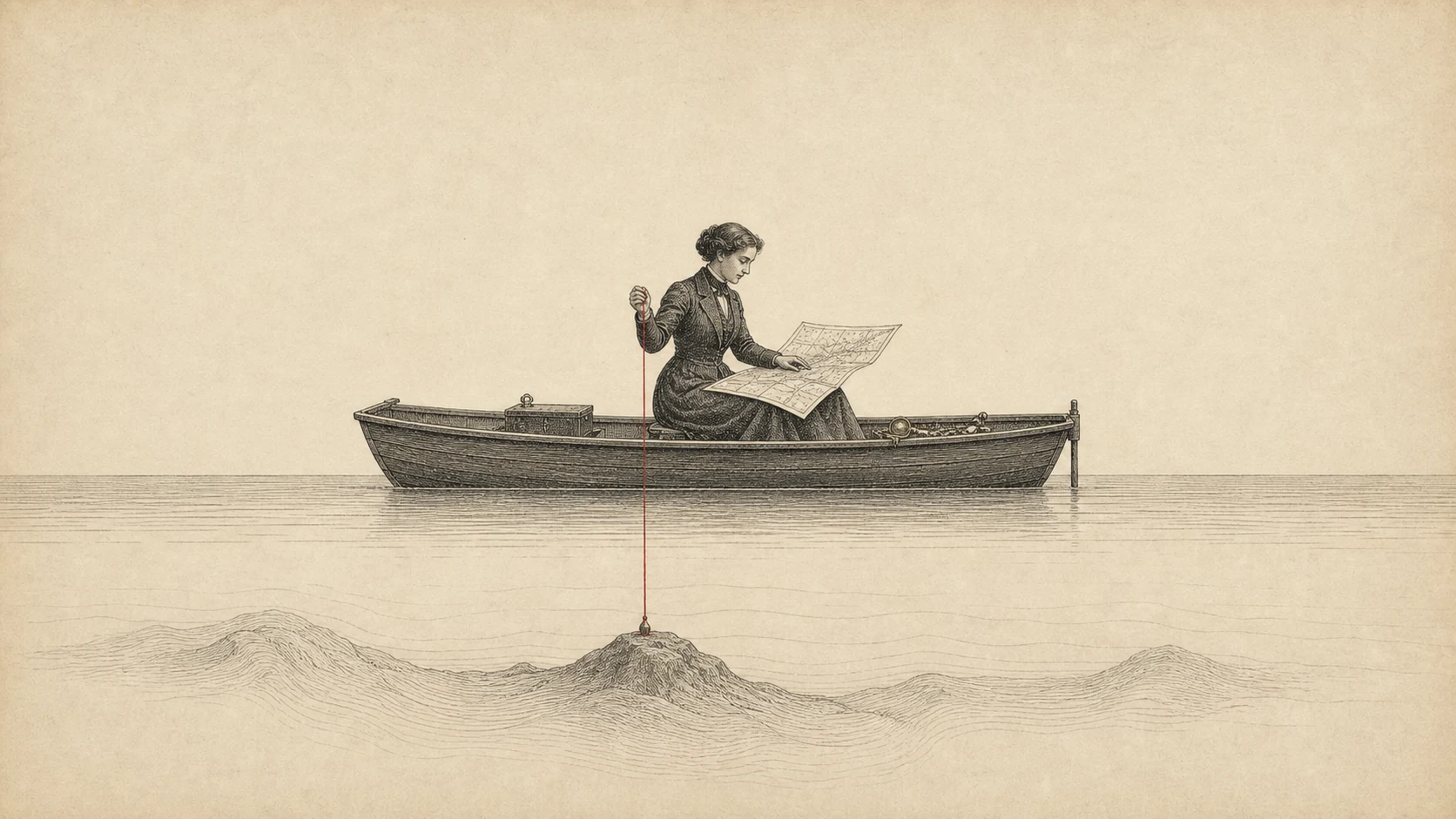
Knowledge · On the Limits of Knowledge · 10–13 min
Audio conversation · 22:28 · EnglishThe Map That Knows It Is a Map
How to distinguish reality’s traces from the story built around them—and make a map that can admit error and correct itself.
How can we remain faithful to reality when we encounter it only through imperfect observations, instruments, words, and institutions of knowledge?
Read the essay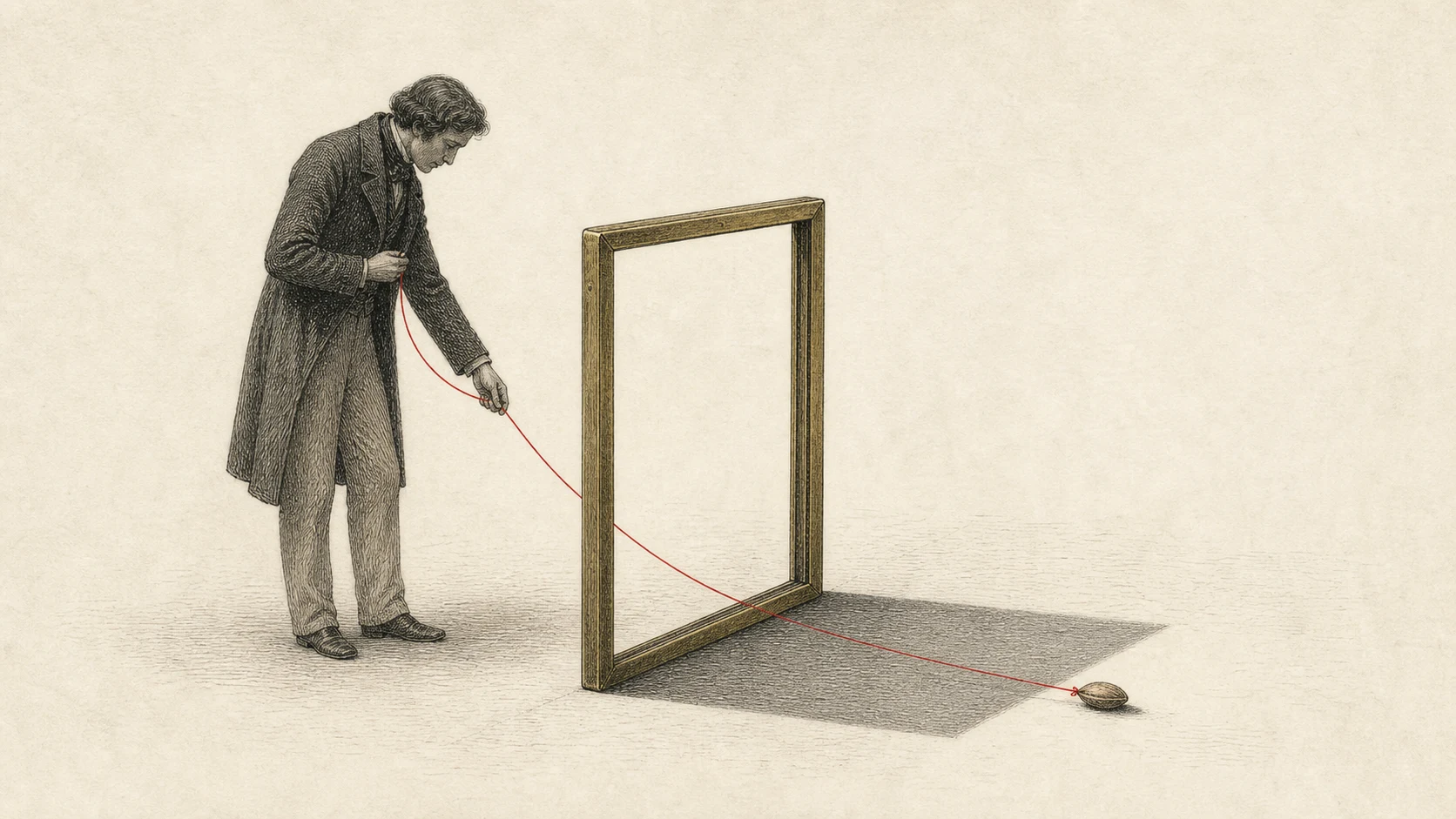
Power · On Power over Visibility · 10–13 min
Audio conversation · 22:16 · EnglishWho Has the Right to Define Reality?
How power decides what becomes visible, which categories become common, and whose bad news can be heard.
Why a dispute about power begins before a command or a vote—with the authority to name the problem, build the category, and decide whose bad news will be heard.
Read the essay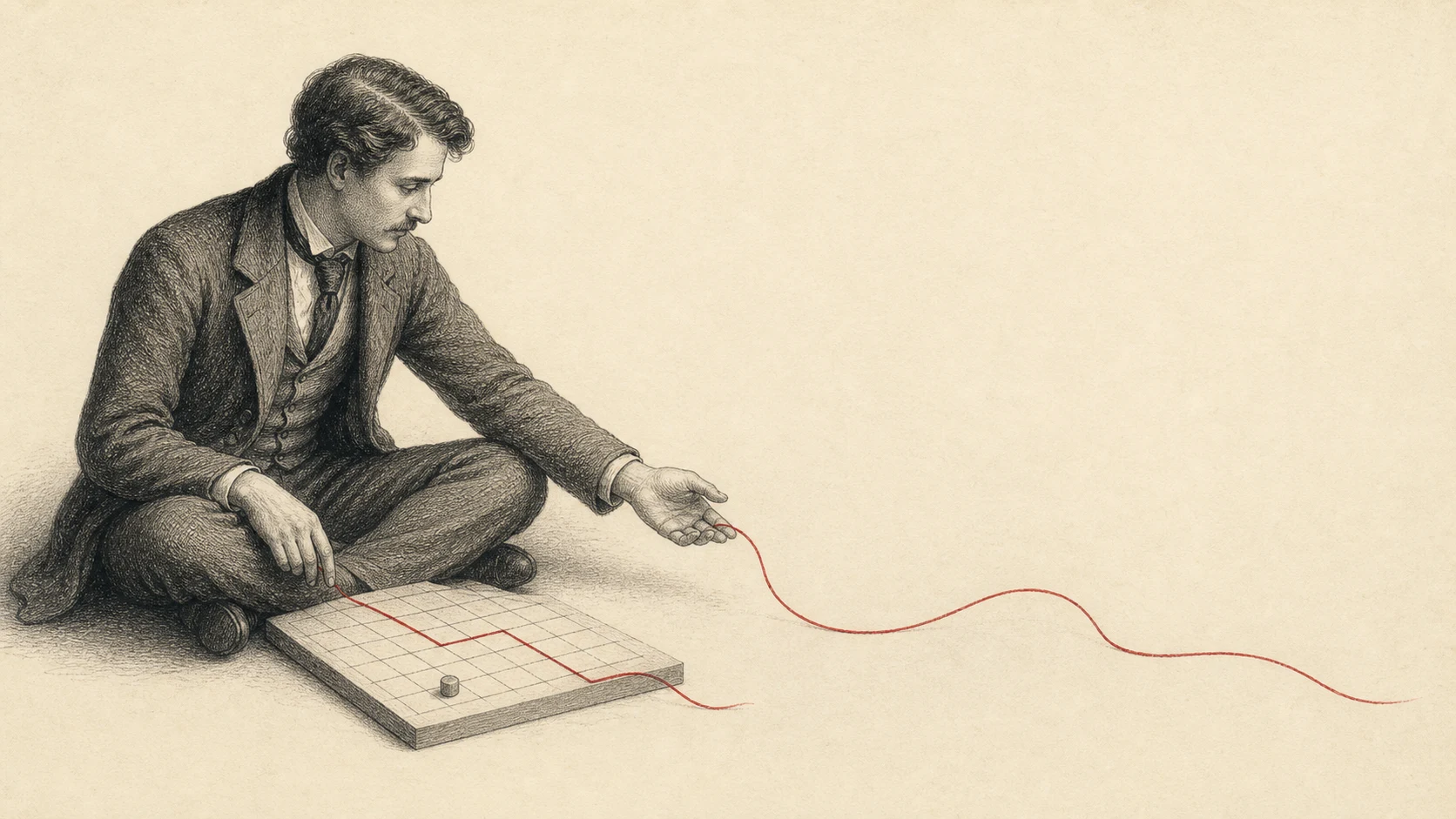
Games · On the limits of strategic language · 10–13 min
Audio conversation · 20:49 · EnglishThe World Is Made of More Than Games
Where the language of games reveals how people’s moves affect one another—and where it distorts love, care, coercion, grief, and dignity.
The language of games is useful when it reveals mutual expectations, hidden options, and responsive actions. It becomes dangerous when it quietly turns every relationship into a calculation, every person into a player, and love, care, coercion, grief, and mortality into matches that could supposedly be played correctly.
Read the essay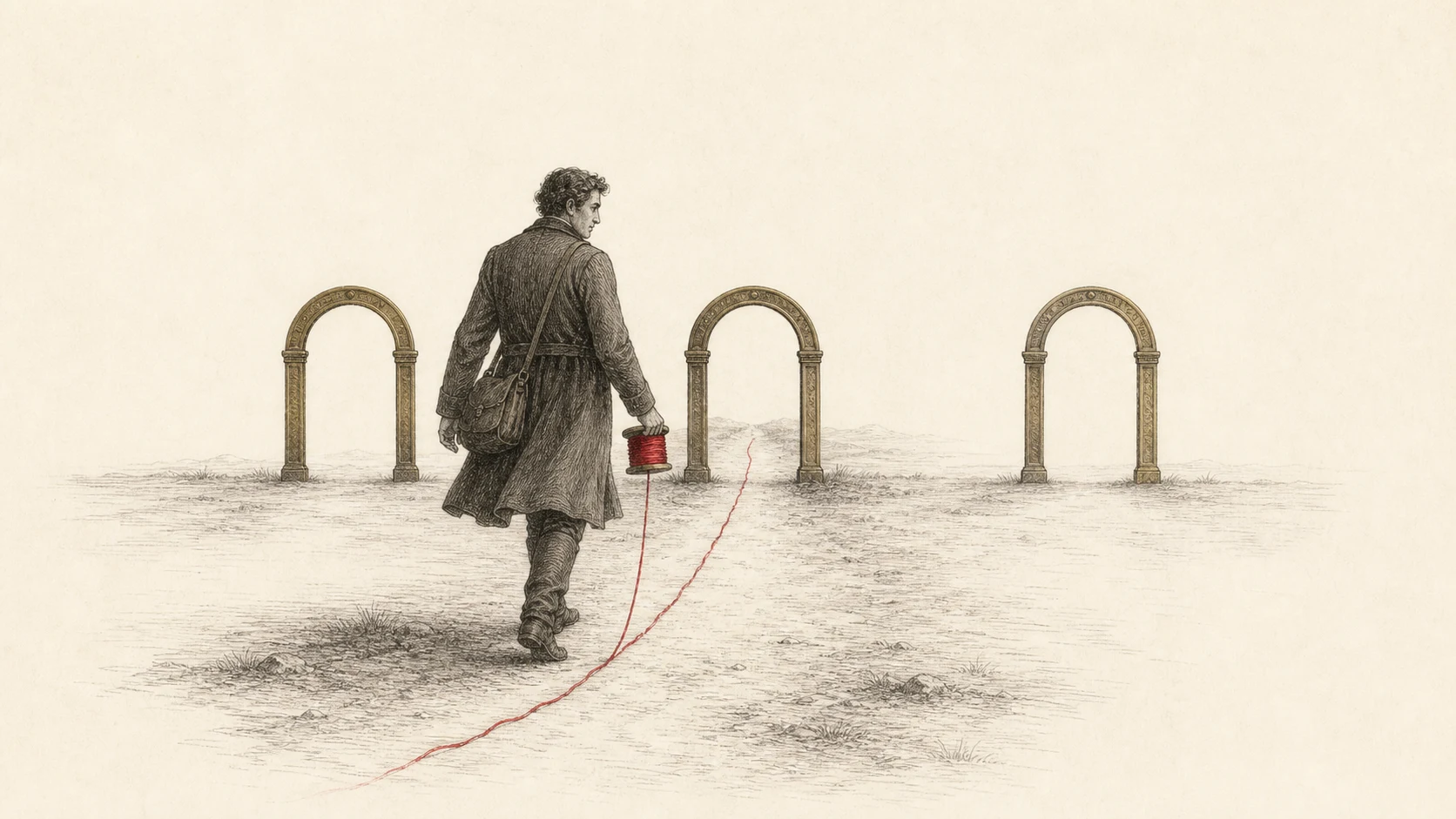
Choice · On choosing a direction · 10–13 min
Audio conversation · 21:35 · EnglishStrategy Is the Art of Organized Refusal
How a chosen direction becomes a strategy through diagnosis, coordinated action, accepted cost, and a clear moral boundary.
Strategy begins where not every good thing can be done at once. It turns a diagnosis of the central difficulty into a coherent set of actions and makes the price of choice visible: which possibilities will be postponed, which obligations will remain, and which boundary must not be crossed even for the desired result.
Read the essay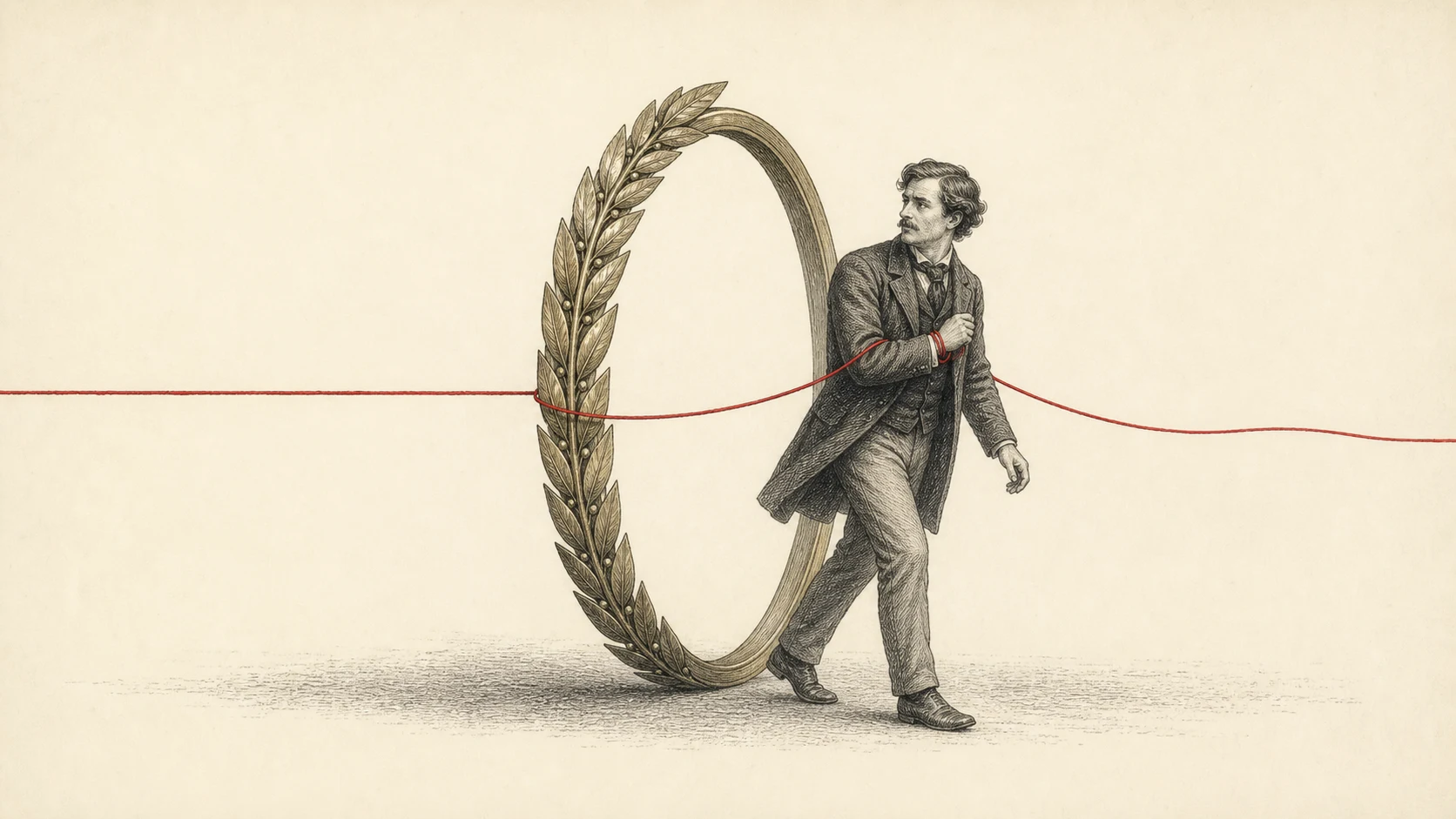
Victory · On the consequences of success · 10–13 min
Audio conversation · 20:17 · EnglishVictory changes the winner
Why success changes interests, relationships, and access to truth—and turns yesterday’s solution into a new problem.
Success does more than give a person greater possibilities. It changes the people around them, the information that reaches them, and the explanation they construct about themselves. The central danger of victory therefore begins not when the result is lost, but when the result is taken as final proof that the winner was right.
Read the essay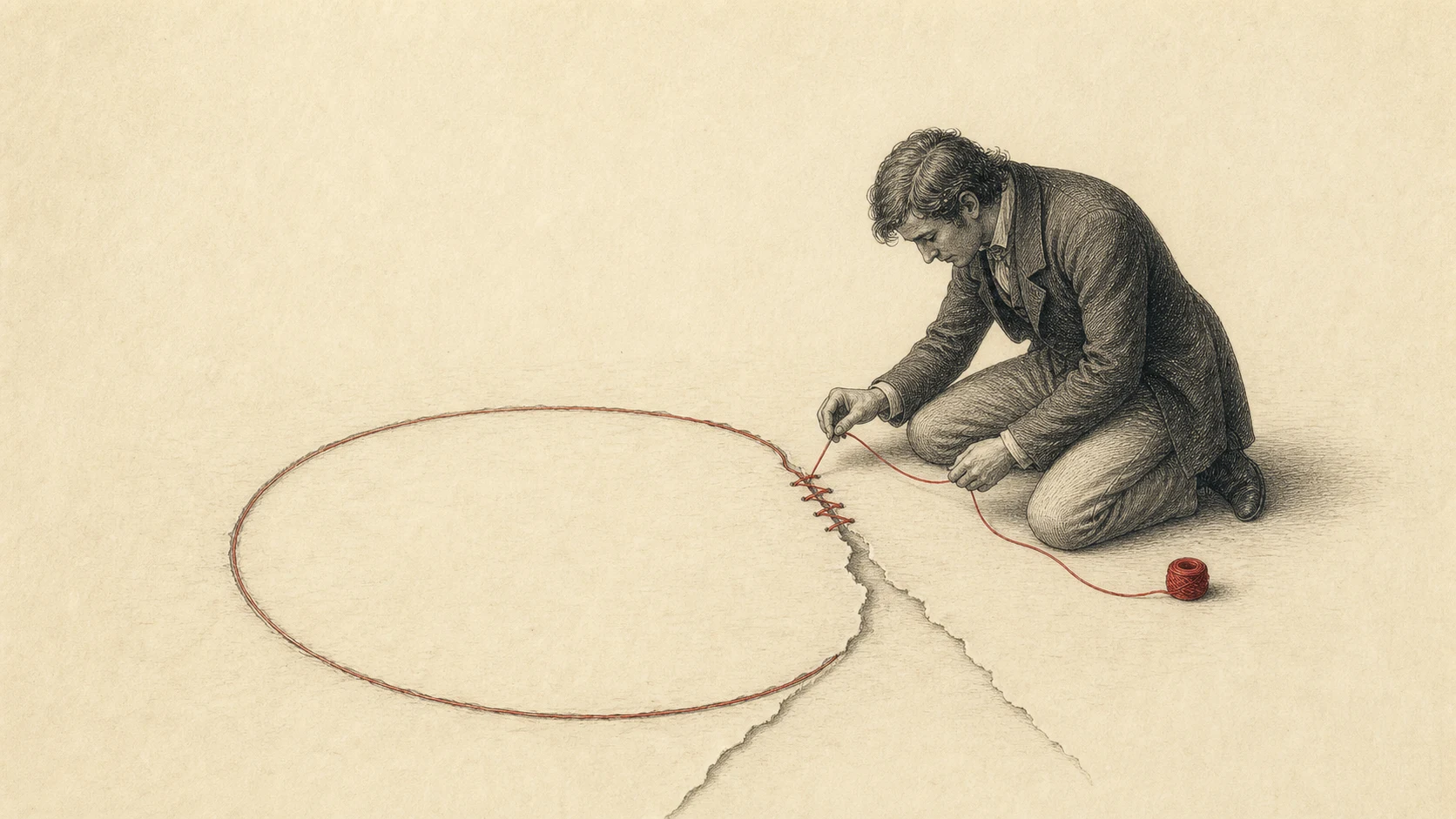
Limit · On where the metaphor must stop · 10–13 min
Audio conversation · 23:39 · EnglishThere is no last arena
What remains when an outcome cannot be won: the response still available, help, presence, and dignity that does not depend on victory.
Calling death the last arena seems to restore order: there is a trial, a stake, a worthy response, and a final score. But the metaphor quietly turns dying into a competition, survival into merit, and fear and dependence into defeat. Finitude needs another language: action without the promise of victory, help without takeover, and dignity without an examination.
Read the essayWhat you have entered
This is not a theory of everything. It is a workshop for mapping human reality
Events have causes, facts can be established, and the material world resists our wishes. Yet human beings never encounter that world without mediation: body, memory, language, fear, hope, and attachment influence what we notice and what meaning we give it.
People act not from reality itself, but from reality as they understand it. A false rumor can therefore cause a real bankruptcy, an imagined humiliation can provoke a real conflict, and hope can keep a group from falling apart. A mistaken model does not suspend causality: once embodied in action, it becomes a cause in its own right.
Millions of such loops observe one another, create rules, and change in response to other people’s forecasts. A causal world is therefore not necessarily fully predictable, especially when its participants can interpret a forecast and respond to it.
The Atlas does not promise to calculate a human being. It helps identify what was observed, what a story added, where personal choice is at work, where the structure of a relationship or institution is at work, and where the chosen model has stopped seeing the living person.
Its task is more modest than a complete theory and more important than an elegant formula: to understand enough to act more wisely, while preserving the distinction among what can be established, explained, conjectured, and only asked of the person who lives this reality from within.
A good map shows more than a path. It shows the boundary beyond which it must give way to a question, testimony, and lived experience.
Why another Atlas
Not a collection of clever phrases, but a grammar of distinctions
Most dangerous errors do not look like stupidity. They look like reasonable ideas applied to the wrong object, at the wrong level, or without a boundary.
We can calculate a metric precisely and be wrong about the aim. We can read a person’s motive well and miss the rule that makes different people behave alike. We can win an argument and destroy the ability to act together.
Every important idea therefore passes eight tests: what distinction it introduces, what mechanism it describes, at which level it works, under what conditions it is true, where it breaks, which strong objection limits it, which example clarifies it, and which question for action it opens.
The basic instrument
Eight distinctions that restore clarity
They do not resolve the situation for you. They prevent two different questions from being answered unnoticed with the same word.
Fact / interpretation
A fact constrains the story; an interpretation connects observations and may be wrong.
Causal mechanism / triggering event
A mechanism explains why an outcome becomes possible or recurs; a triggering event starts a particular chain. A dismissal may trigger a protest, but accumulated conditions, rules, and expectations explain why protests keep recurring.
Influence / control
Influence changes a probability. Under known conditions, control keeps a significant result within specified bounds and requires feedback. In a complex human system, control is rarer than influence.
Power / right
The ability to get one’s way does not yet explain why doing so is permissible or who had a chance to object.
Outcome / decision quality
A fortunate outcome does not justify carelessness, and a bad outcome does not always prove that the decision process was flawed.
Cost / value
Cost shows what was given up; value requires an answer about what and whose good could justify that sacrifice.
Game / life
In a game, moves and interdependence among players can be distinguished. This language does not always fit grief, love, the body, or mortality.
Consent / absence of refusal
Silence under conditions of dependence is not free consent with a safe possibility of saying no.
The route
Six movements from observation to the limit
The order matters: first see, then choose; first understand the interaction, then judge the victory.
Seeing
Separate the trace from the story, the decision from the outcome, the event from the structure, and an open dispute from power over the agenda itself.
What was actually observed here—and what was filled in by the mind, a metric, or an institution?
Choosing
Understand the real range of freedom, values that cannot be reduced to one another, the logic of strategy, and the price of irreversible risk.
What am I choosing, what am I giving up, and which possibility must I preserve?
Acting with Others
Distinguish games, conflict, cooperation, arenas, institutions, and status competition instead of compressing them into a single word about influence.
Whose actions determine the outcome, who sets the rules, and who is free to refuse?
Learning
Make experience testable: understand where intuition comes from, why bad news disappears, and how an organization corrects itself.
What feedback can change not only an action, but also the rule that produced it?
Being Changed by Action
See that victory changes incentives, power changes perception, and every consequential action creates a new trajectory.
Who will I become, and what kind of system will I inhabit, if this plan succeeds?
The Limit
Speak about narrowing possibilities, suffering, dignity, and finitude without glorifying them or turning life into one final game.
What remains a worthy action when control and time are genuinely limited?
Standing on the shoulders of giants
Great thinkers do not give one answer—they correct one another’s blindness
The Atlas does not hide contradictions beneath an elegant ‘synthesis.’ Tension between lenses is often the source of more mature judgment.
Testing and framework
A claim must risk being wrong; yet the very way an error becomes visible is already organized by a community’s concepts and practices.
Error and adaptation
A heuristic can distort judgment, or it can be an accurate response to an environment. The question is where it arose and what feedback shaped it.
Acting together and shaping the field
Power arises when people act together, and works more deeply when it shapes the norm, the category, and the questions that may be asked.
Effectiveness and limit
Intentions do not rescue us from consequences; consequences do not entitle us to turn a person into a mere means.
Inner response and real opportunity
It is useful to distinguish our available response from the external world; it is dangerous to forget that resources and institutions distribute the very ability to choose.
Meaning and testimony
Meaning can sometimes be created in defiance of suffering; suffering is not obliged to have meaning and does not entitle us to demand heroism from the person who bears it.
Beginning
The first discipline is never to trust even a good map unconditionally
A map is useful because it is smaller than the territory. It becomes dangerous when it hides what it selected. We will therefore begin not with power, strategy, or success, but with a simple question: how does reality leave a trace, and how does the mind turn traces into a story?