Games: how people’s actions change one another’s calculations
A situation becomes strategic not simply because other people are present. It becomes strategic when my outcome depends on their choices, while their choices depend on what they expect me to do. Before choosing a move, we must understand the structure of this mutual dependence.
A game is a model of interdependence among participants. It should be described through available actions, information, consequences, expectations, and time—not through the topic of the conversation or the personalities involved.
Misidentifying the interaction leads us to bargain over a coordination problem, wage war on a cooperative relationship, offer trust where no verification exists, or turn a joint search for truth into a contest.
First, distinguish
Two concepts that are easy to mistake for one another
An ordinary decision depends mainly on the state of the world and one’s own action. A strategic interaction also depends on how others anticipate and alter their actions in response. Choosing an umbrella from a weather forecast is an ordinary decision. Naming a price in a negotiation is strategic: the other party will change its offer because it heard yours.
A game describes the structure of mutual expectations and consequences within a particular interaction. An arena describes the more durable environment that distributes roles, information, rules, coercive power, and the cost of exit. A salary negotiation is a game; the labor market, the law, the profession, and the organization of the company form the arena in which the parties acquired unequal options.
Name the central problem of interdependence first
A useful first analysis distinguishes four problems that are often confused: coordination, joint contribution, division of a limited outcome, and unequal information or authority.
Why this happens
Coordination fails when expectations do not align; joint contribution fails when someone can benefit from the common result without doing their share; division fails when claims are incompatible; unequal information or delegation fails when knowledge, decisions, and consequences belong to different people. Different causes of failure require different rules and moves.
Two departments argue about a data format as if one side must defeat the other. But if their central problem is coordination, the question changes: what common standard can both verify and maintain? If one department will gain budget and status from the choice, however, a real distributional conflict sits alongside the coordination problem.
Do not confuse this with
These are not four kinds of human relationship. They are four analytical problems that can coexist in the same conversation.
Where the idea stops working
The list does not exhaust strategic situations or prove that people care only about gain. Its purpose is to find the nearest mechanism of failure, then add power, norms, history, and values to the map.
Question for the situationWhat most obstructs the result now: misaligned expectations, evasion of contribution, incompatible claims, or a split between knowledge, decision, and consequences?
A game is not understood until its variables are named
Before advising a move, identify the participants and affected outsiders, the real options, the distribution of information, possible consequences, expectations about the future, the means of enforcement, and the cost of exit.
Why this happens
A missing variable changes the calculation. A threat without enforcement does not deter; a ‘voluntary’ contract without an affordable refusal does not prove equality; a one-time gain may become a loss when repeated; harm to people outside the negotiation does not enter the parties’ decisions until a rule brings it back in.
A client and contractor sign an inexpensive contract. If the penalty is small, quality is hard to verify, and a building’s residents will pay for later failures, the stated price conceals the real structure of gains and losses.
Do not confuse this with
A formally permitted move is not the same as a genuinely available move. An option exists only when a participant has the information and resources to choose it at a tolerable cost.
Where the idea stops working
A complete model is impossible, and excessive analysis can delay necessary action. The map should highlight variables capable of changing the decision and openly mark what is unknown instead of pretending to be complete.
Question for the situationWhose action, knowledge, consequence, or lack of a right to exit is missing from our model?
Judge a move together with the countermove it invites
In a strategic interaction, a plan must include the likely response of other participants and the path that follows, not only the immediate gain from our own action.
Why this happens
The other participant observes, learns, and changes behavior. An initial advantage can trigger adaptation, a countercommitment, a loss of trust, or a coalition against you. The meaning of a move therefore depends not only on the position immediately afterward, but also on the expectations it changes for the next round.
A company recruits a competitor’s key employee with a large one-time payment. It gains the specialist, but also raises expectations across the industry, provokes retaliatory hiring, and tells its own team that an outsider is paid more for the same work.
Do not confuse this with
A move is the nearest change in position. A trajectory is the chain of responses, rules, and expectations that the move sets in motion.
Where the idea stops working
Not every person is an opponent and not every response is directed against you. A military model carried into friendship, parenting, or joint inquiry can destroy the trust it was meant to protect.
Question for the situationWhat will the other participant learn from our move, and what new behavior will become reasonable for them afterward?
Synthesis without reconciliation at any price
A game model is useful only when its limits are respected
It helps reveal mutual expectations, hidden information, countermoves, and the structure of rules. But the model must stop where it reduces a person to a carrier of payoffs and erases trust, duty, vulnerability, or the intrinsic value of a relationship.
A tension worth preservingToo little strategic analysis leaves a person naive before other people’s calculations. Too much strategic analysis makes calculation visible even where the ability not to calculate is a condition of intimacy and a shared search for truth.
Long view
An essay that carries this idea through a complete argument
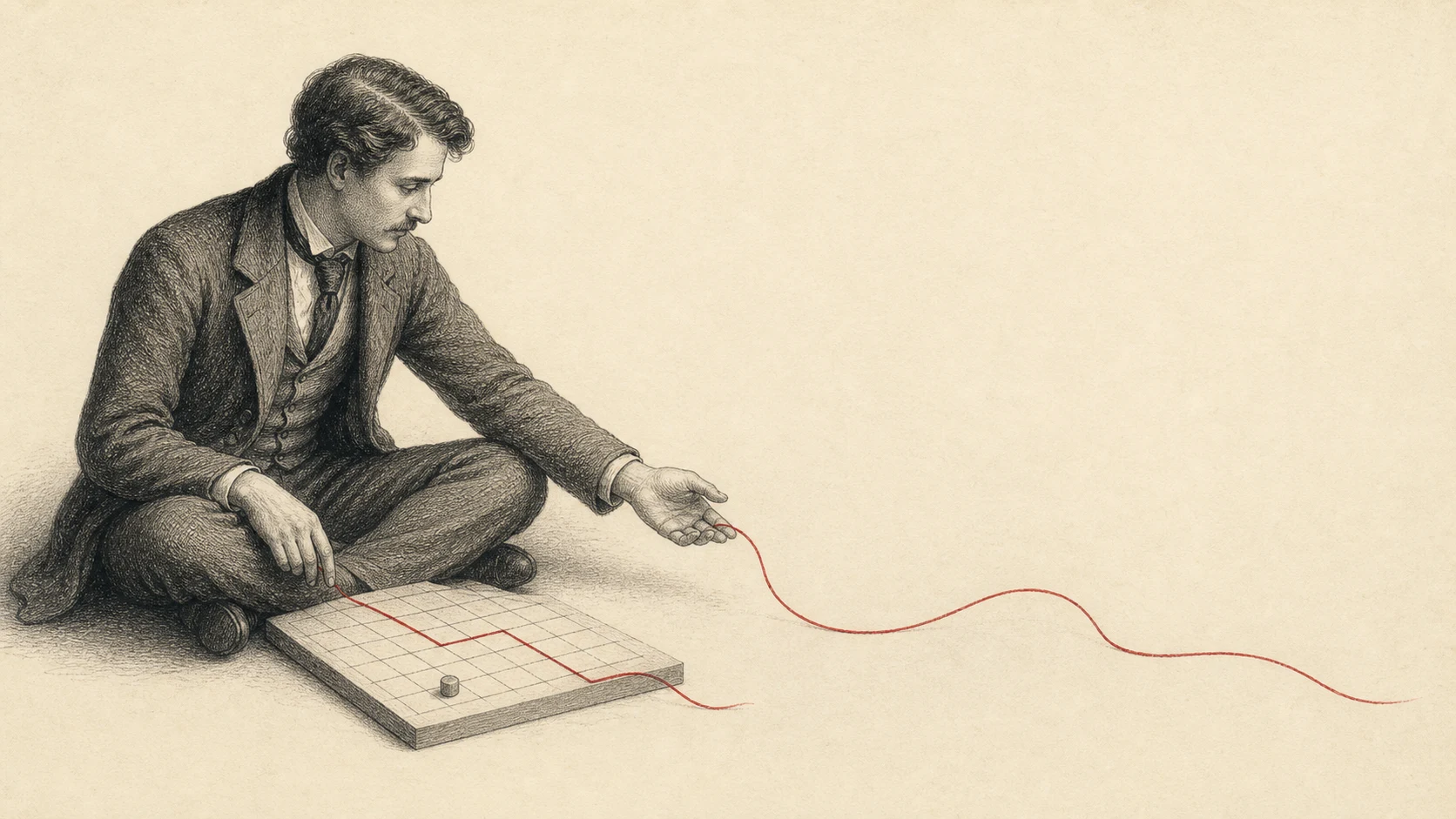
The language of games is useful when it reveals mutual expectations, hidden options, and responsive actions. It becomes dangerous when it quietly turns every relationship into a calculation, every person into a player, and love, care, coercion, grief, and mortality into matches that could supposedly be played correctly.
There is no last arena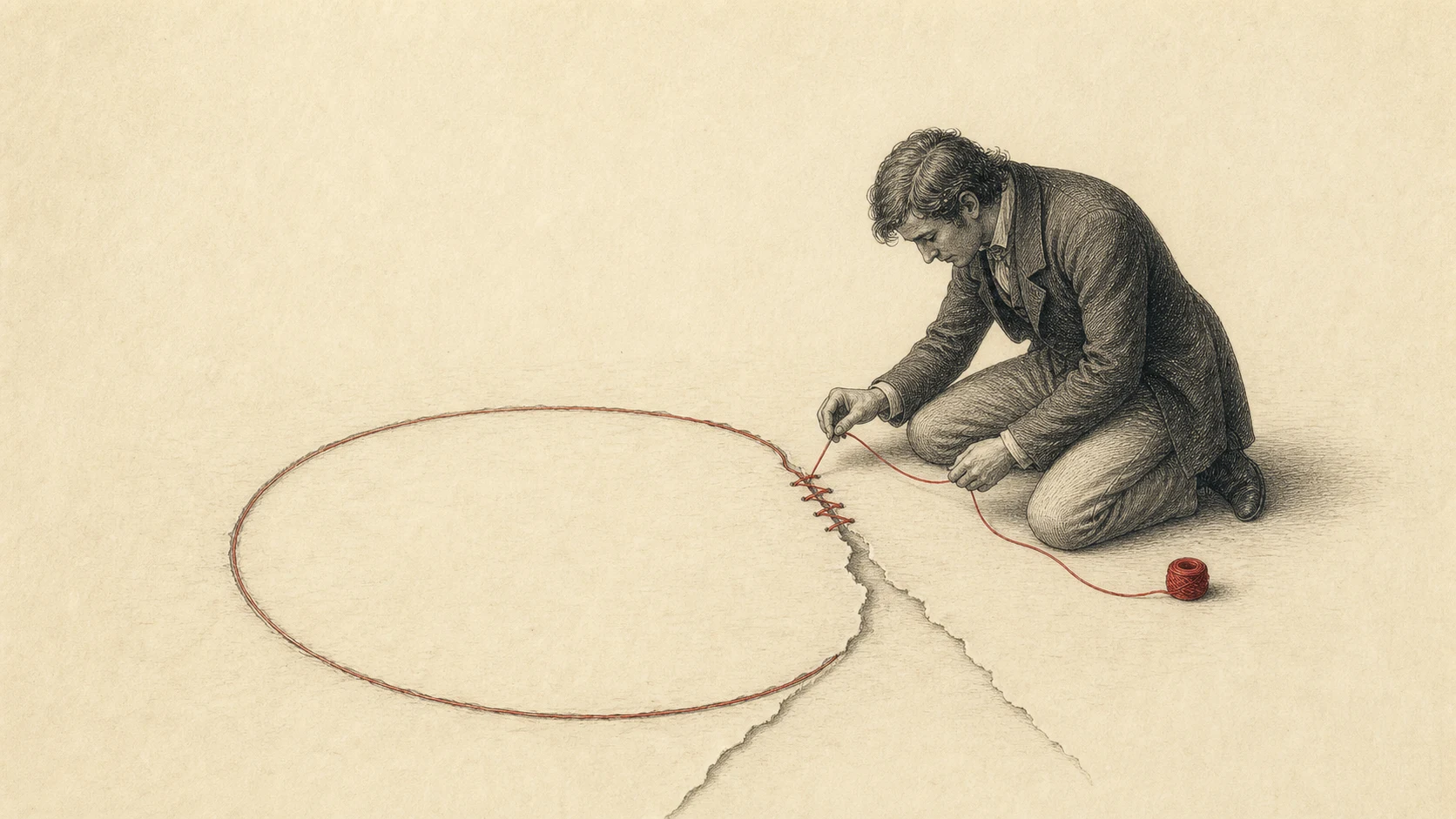
Calling death the last arena seems to restore order: there is a trial, a stake, a worthy response, and a final score. But the metaphor quietly turns dying into a competition, survival into merit, and fear and dependence into defeat. Finitude needs another language: action without the promise of victory, help without takeover, and dignity without an examination.
Continue the thought
Works that test the thesis rather than repeat it
In strategic conflict, promises, threats, coordination, and the ability to bind oneself change the other side’s expectations.
Dr. Strangelove or: How I Learned to Stop Worrying and Love the BombStanley KubrickDeterrence can become a machine for catastrophe when secrecy, automation, and incompatible incentives deprive the system of the ability to stop.
The shoulders this chapter stands on
A source is not a seal of truth. Each entry says what it clarifies and where its lens needs to be limited.
Thomas C. Schelling
The Strategy of Conflict
What it clarifies
A promise, threat, or commitment works only when the other side believes the future move; sometimes restricting one's own options changes the game.
What it does not prove
A threat's strategic effectiveness does not make it morally permissible or account for the full human cost of conflict.
Elinor Ostrom
Governing the Commons
What it clarifies
Between privatization and command from above lie many durable arrangements that users of a common resource create and monitor themselves.
What it does not prove
Self-governance does not work automatically: boundaries, trust, observability, the right to change rules, and proportionate sanctions all matter.
Herbert A. Simon
Administrative Behavior
What it clarifies
People choose with limited time, attention, and knowledge, so they seek an option that is good enough rather than calculate a global maximum.
What it does not prove
Boundedness does not release us from improving decisions; it requires us to design the environment, search rules, and feedback.
James C. Scott
Seeing Like a State
What it clarifies
To govern many people, a center simplifies reality into categories and measures; together with noise, it may erase the knowledge on which life depends.
What it does not prove
Criticism of simplification does not imply that coordination at scale, measurement, and standards are always harmful.
Amartya Sen
Development as Freedom and the capability approach
What it clarifies
Freedom is not only a formal right or a resource, but the real opportunity to be and do what a person has reason to value.
What it does not prove
The approach deliberately provides no single list of goods; evaluating capabilities in practice remains contested and contextual.
Carl von Clausewitz
On War
What it clarifies
A plan encounters friction, uncertainty, and an adversary's will; action cannot be derived from a map without leaving room for adaptation.
What it does not prove
Military logic dangerously distorts relationships, learning, and politics when every problem is declared a war.
Hannah Arendt
The Human Condition
What it clarifies
Human action arises among people who are equal and distinct; no one fully controls the story begun by their own deed.
What it does not prove
The distinctions among labor, work, and action illuminate experience, but do not form a strict empirical classification of every life.