Death is not defeat: what finitude changes—and what it does not decide for us
The language of games is useful where there are reciprocal moves, changeable rules, and a score. It breaks down when death is called the final opponent, care a means of victory, and human worth a result. Finitude does not cancel action, but it shows that not every important action serves a win.
Mortality makes time irreversible and therefore exposes the cost of choice, but it supplies neither the one right goal nor the one right way to die. Dignity does not depend on clarity, independence, or courage. Care can genuinely change the world—reducing pain, preserving will and connection—even when it does not change the final outcome.
If death is treated as defeat, a person and a system may continue fighting for the score while ignoring will, pain, and the cost of the final days. If finitude is romanticized, treatment, planning, and protection of the future may be abandoned. We need a language in which struggle and acceptance are possible responses, not duties imposed on everyone.
First, distinguish
Two concepts that are easy to mistake for one another
Limited time makes it impossible to live every possible life and forces us to pay for one choice by forgoing another. But the fact of death alone does not tell us what life should be devoted to: love, duty, creation, and freedom can remain in conflict.
Dignity means that a person’s pain, will, and relationships matter regardless of usefulness or self-command. Control, clarity of speech, and physical independence can disappear without turning a person into an object or a failure.
Finitude makes the cost of time visible, but does not choose value for us
Because a lifetime is irreversible, every lasting “yes” excludes other possible lives; awareness of death reveals this exchange but does not calculate the right answer.
Why this happens
Everyday life lets a familiar path feel endless. A reminder of finitude restores the opportunity cost: one more title may mean less intimacy, safety may mean less freedom, and fidelity to one duty may mean abandoning another. Goods remain incommensurable, so the decision still requires judgment and responsibility.
A person declines a fifth promotion that requires constant travel in order to spend more time with their children. This does not prove that a career is empty; it openly acknowledges the cost of a particular choice within a limited life.
Do not confuse this with
Do not confuse a limited number of options with meaninglessness: a finite relationship, work, or action does not become less valuable because it does not last forever.
Where the idea stops working
Constant reflection on death can intensify anxiety and constrict life. Remembering finitude does not forbid treatment, saving, education, or projects whose fruits will be seen by others.
Question for the situationWhat irreversible part of my life does my present choice require, and what good am I in fact pushing aside without naming the refusal?
Dignity is not a reward for clarity, courage, or independence
Fear, confusion, dependence, and the absence of a reconciling speech do not diminish the human worth of a dying person or mean that they have handled the final stage “badly.”
Why this happens
If dignity is tied to the image of a strong autonomous person, illness turns loss of capacity into loss of status. Recognizing dignity before the outcome changes how others act: they continue to attend to pain, past and present wishes, personal ties, and the right to protection.
A dying patient is frightened, contradicts himself, and answers loved ones harshly. The loved ones need protection, the condition needs relief, and the patient’s wishes should be clarified where possible—but fear gives no one the right to treat him as a damaged object or a moral failure.
Do not confuse this with
Do not confuse a person’s unconditional worth with approval of every action: dignity remains, while harm may still require limits, protection, and a response.
Where the idea stops working
A general principle does not resolve specific medical and legal conflicts between present wishes, prior directives, well-being, and the safety of others. These require context, professional expertise, and a lawful procedure.
Question for the situationAre we tying this person’s right to be heard to their ability to behave calmly, logically, and conveniently for us?
Care has an outcome even when it cannot undo death
Reducing pain, preserving the possibility of saying “yes” or “no,” fulfilling an important request, and not leaving someone alone are real changes in the world, although they do not turn death into victory.
Why this happens
Not every value is measured by prolongation or external achievement. Attention makes another person’s particular experience visible; presence, care, and representation change the quality of the time that remains and preserve relationships that cannot be reduced to means for reaching an endpoint.
A loved one sits beside a dying person through the night, helps explain a wish to the doctor, and holds a hand. The loved one does not control the outcome but changes the pain as experienced, whether the person’s will is heard, and the fact of being left alone.
Do not confuse this with
Do not confuse an inability to cure with an inability to help, or help with a duty to create a beautiful meaning for someone else.
Where the idea stops working
Presence cannot be prescribed in the same way to everyone: relationships can be dangerous, resources are limited, and a person may want solitude. This claim is not medical advice and does not determine a particular amount of treatment or care.
Question for the situationWhat important change is still possible if we stop judging an action only by whether it prevented the final outcome?
Synthesis without reconciliation at any price
A mature language knows where it ceases to be complete
Strategy asks how to change the probability of an outcome; ethics asks what must not be done for its sake; care asks what this particular person needs now. At the limit, none of these languages should take over the others. Death limits action but does not evaluate a life by a single score, and presence does not become useless because there is no victory.
A tension worth preservingStopping the game metaphor does not mean stopping analysis, treatment, or protection. It means refusing to treat control as the only value, survival as a moral examination, or a comforting meaning as something a person is required to produce.
Long view
An essay that carries this idea through a complete argument
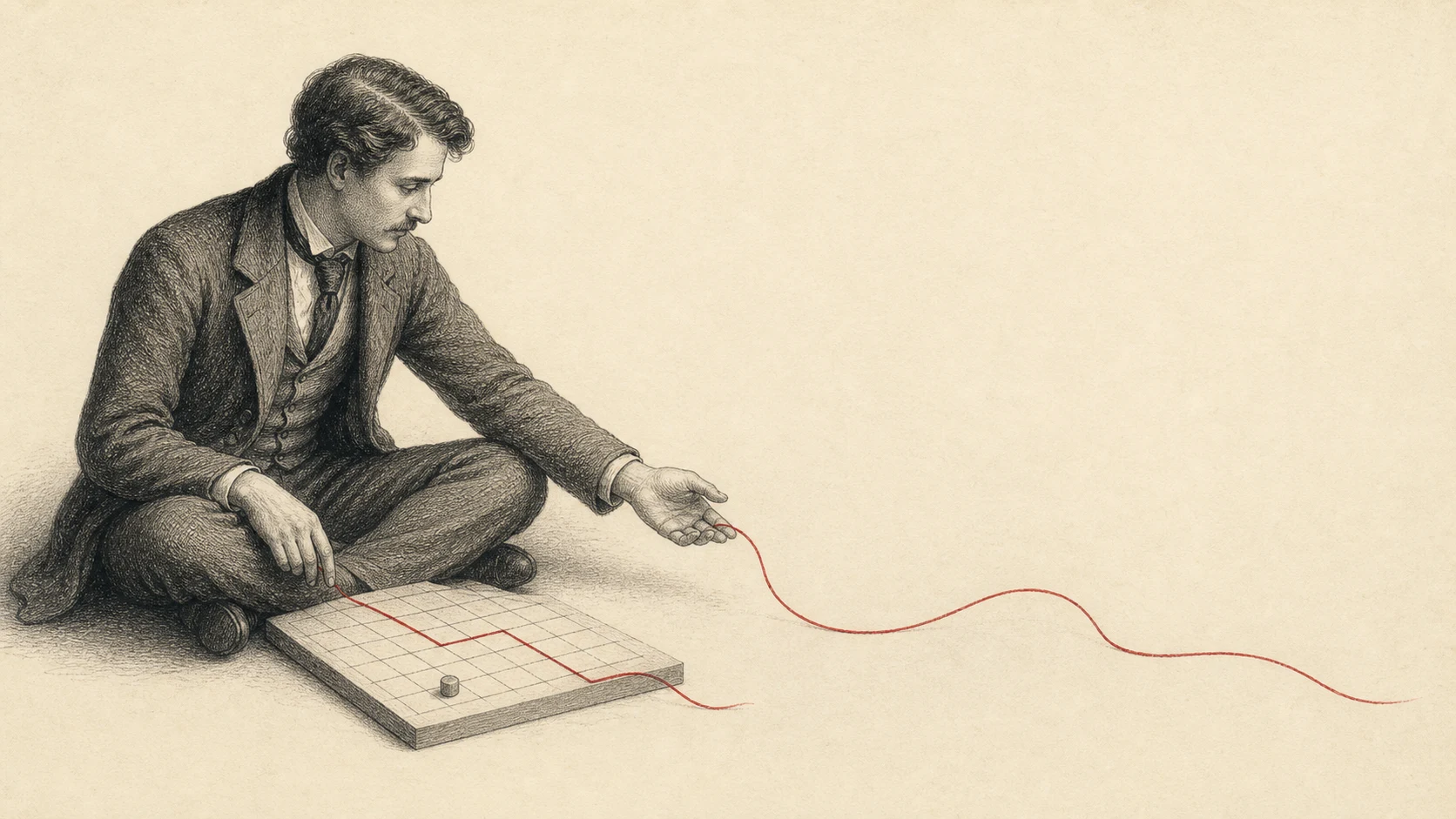
The language of games is useful when it reveals mutual expectations, hidden options, and responsive actions. It becomes dangerous when it quietly turns every relationship into a calculation, every person into a player, and love, care, coercion, grief, and mortality into matches that could supposedly be played correctly.
There is no last arena
Calling death the last arena seems to restore order: there is a trial, a stake, a worthy response, and a final score. But the metaphor quietly turns dying into a competition, survival into merit, and fear and dependence into defeat. Finitude needs another language: action without the promise of victory, help without takeover, and dignity without an examination.
Continue the thought
Works that test the thesis rather than repeat it
When circumstances constrict a person’s possibilities, meaning can sometimes remain in an attitude, a responsibility, and a life directed toward someone or something.
If This Is a ManPrimo LeviTestimony about the limit must preserve the particularity of people and mechanisms rather than turn horror into a beautiful parable about heroism.
The Drowned and the SavedPrimo LeviSurvivors do not represent everyone who died, and the outcome of an extreme situation cannot honestly be explained by character, meaning, or virtue alone.
The shoulders this chapter stands on
A source is not a seal of truth. Each entry says what it clarifies and where its lens needs to be limited.
Leo Tolstoy
The Death of Ivan Ilyich
What it clarifies
A socially successful life may be estranged from one's own experience; finitude tests not one's rank, but the truthfulness of relationships and of time as it was lived.
What it does not prove
The novella offers one author's moral and religious perspective, not the only right way to die.
Isaiah Berlin
Two Concepts of Liberty; value pluralism
What it clarifies
Genuine values are plural and may conflict without a single common currency; a mature choice sometimes leaves an irreparable loss.
What it does not prove
Pluralism does not mean that all values are equally good or that reasonable comparison is always impossible.
Aristotle
Nicomachean Ethics
What it clarifies
A good life consists not in a single result, but in activity, character, and practical wisdom applied to particular situations.
What it does not prove
The ancient conception of the citizen excluded many people; it cannot be carried into the present without criticism.
Albert Camus
The Myth of Sisyphus
What it clarifies
The absence of an ultimate guarantee of meaning does not make action impossible; a person can live and answer without a metaphysical receipt.
What it does not prove
The aesthetics of revolt cannot replace care, politics, treatment, or concrete help for a person in despair.
Immanuel Kant
Groundwork of the Metaphysics of Morals
What it clarifies
Another person must not be merely a means to our project: their capacity to choose places a limit on effective action.
What it does not prove
An abstract rule does not always resolve conflicting duties or show how to act within unequal relations of power.
Primo Levi
The Drowned and the Saved
What it clarifies
Survivors do not represent all who died, and the outcome of an extreme situation cannot honestly be explained by character, meaning, or virtue alone.
What it does not prove
Levi's concepts belong to the specific history of the Holocaust; they must not be turned into universal motivational metaphors.
Amartya Sen
Development as Freedom and the capability approach
What it clarifies
Freedom is not only a formal right or a resource, but the real opportunity to be and do what a person has reason to value.
What it does not prove
The approach deliberately provides no single list of goods; evaluating capabilities in practice remains contested and contextual.
Simone Weil
Gravity and Grace; essays on attention and force
What it clarifies
Moral attention begins when one's own project ceases to obscure concrete reality and another person's suffering.
What it does not prove
Weil's self-renunciation is radical; it must not become a demand to endure exploitation or disappear for the sake of others.
Iris Murdoch
The Sovereignty of Good
What it clarifies
An action begins before the moment of choice—in the quality of attention, language, and imagery through which we are able to see another person at all.
What it does not prove
The inner work of attention cannot replace institutional change or the material redistribution of power.
Hannah Arendt
The Human Condition
What it clarifies
Human action arises among people who are equal and distinct; no one fully controls the story begun by their own deed.
What it does not prove
The distinctions among labor, work, and action illuminate experience, but do not form a strict empirical classification of every life.