How choice changes when the body, threat, and loss narrow the capacity to act
Acute danger, illness, exhaustion, grief, captivity, and prolonged crisis are not one situation and do not share a single set of instructions. They have only this in common: the actions available to a person can change sharply with the body, safety, information, support, and time. This chapter is a philosophical map of distinctions, not medical or crisis guidance.
In an extreme situation, agency is not switched on or off once and for all; it contracts, fluctuates, and is partly carried through relationships. Asking, entrusting a decision, accepting care, or simply stating one’s wishes can sometimes be a complete available action. Neither the size of that action nor survival measures human dignity.
The language of inner freedom can restore a foothold, but it easily turns into an accusation: “If you broke, you chose the wrong response.” The opposite error is to regard a vulnerable person as entirely passive and decide everything for them. We need a way of seeing that protects both the remaining voice and the right not to be a hero.
First, distinguish
Two concepts that are easy to mistake for one another
Agency is the possibility of taking part in a response: choosing, asking, refusing, expressing a preference, or delegating a decision. Control is the ability to keep the outcome within specified bounds. The first can remain where almost none of the second does.
A person may need an interpreter, medicine, physical support, or a trusted representative while remaining the source of goals and preferences. Help need not replace their agency; it can make agency practicable.
A limit changes the capacity to choose; it does not merely reveal ‘true character’
Behavior under threat, pain, or exhaustion cannot fairly be judged as though the person retained the same attention, time, safety, and alternatives as before.
Why this happens
Pain, exhaustion, and immediate threat can narrow attention, obstruct access to memory, and sharply increase the cost of every action. Social support, reliable information, and rest can widen choice; isolation and coercion can narrow it further. The same person therefore has a different practical field of action at different hours.
During an evacuation, one person gathers documents and coordinates others, while another can only hold a loved one’s hand and follow. The difference in action cannot yield a simple ranking of these people’s moral worth or “real strength.”
Do not confuse this with
Do not confuse an available response with the ideal response imagined by an observer who knows the outcome and is safe.
Where the idea stops working
People do differ in preparation and response, and actions can cause harm. Context refines the measure of available choice; it does not make every action equally good or permit a medical diagnosis from a story.
Question for the situationWhich bodily, informational, and social conditions are narrowing choice now, and what can be changed before a more demanding decision is required?
Asking and delegating a decision can be forms of agency
When a person cannot perform an action alone, they can still participate through a precise request, a trusted person, a wish expressed in advance, or consent to receive help.
Why this happens
A real capability arises from the combination of personal capacity and external support. An interpreter restores understanding, pain relief restores the ability to focus, and a trusted representative carries a person’s will through a situation in which they cannot speak or act directly.
A gravely ill person asks a sister to handle discussions with doctors, but first names the risks that are unacceptable and the people who must be informed. Delegation reduces the burden without erasing the source of the decision.
Do not confuse this with
Do not confuse independence with authorship: an action can be carried out by others and still express the will of the person receiving help.
Where the idea stops working
Help becomes takeover when the helper conceals options, applies pressure, or substitutes personal preferences. As far as possible, consent, previously expressed wishes, and conflicts of interest must be checked; specific medical decisions require professional expertise and context.
Question for the situationWhich part of the action does the person want to retain, which part to entrust, and what must change for their will to remain audible?
Survival does not prove superiority, and breaking does not prove moral worthlessness
The outcome of an extreme situation depends not only on character, but also on chance, the body, violence, help, and position; a survivor’s story therefore provides no formula for judging those who did not survive or were broken.
Why this happens
We hear those who remained able to tell the story and see their later explanation. The experience of those who disappeared, and the moment when their resources for choice were exhausted, are scarcely represented. Selection by outcome creates a false link between survival and moral merit.
Two people live through the same disaster differently: one is helped by an accidental passage, a familiar language, and a stranger; the other is injured and isolated. The first person’s account may be valuable testimony, but it is not a set of instructions by which the second “should have” saved themselves.
Do not confuse this with
Do not confuse respect for a courageous act with the claim that failing to perform it cancels a person’s dignity.
Where the idea stops working
Unconditional dignity does not erase harm or forbid an examination of responsibility. But judgment must consider coercion, knowledge, and real alternatives rather than the imaginary freedom of a safe observer.
Question for the situationWhat part did help, chance, the body, and available alternatives play in this outcome—and on what basis do I attribute the remainder to character?
Synthesis without reconciliation at any price
A smaller capacity to act does not make a person smaller
At the limit, it is reasonable to seek the available portion of response, but not to turn it into a compulsory performance of self-command. Sometimes action means organizing rescue; sometimes it means naming one preference, accepting help, or sustaining a connection. Dignity precedes the quality of these actions and is not awarded for graceful behavior.
A tension worth preservingIf authorship is taken entirely from a vulnerable person, care becomes management of them. If constant authorship is demanded, help becomes a test of strength. Support should expand what is possible without imposing a duty to use it heroically.
Long view
An essay that carries this idea through a complete argument
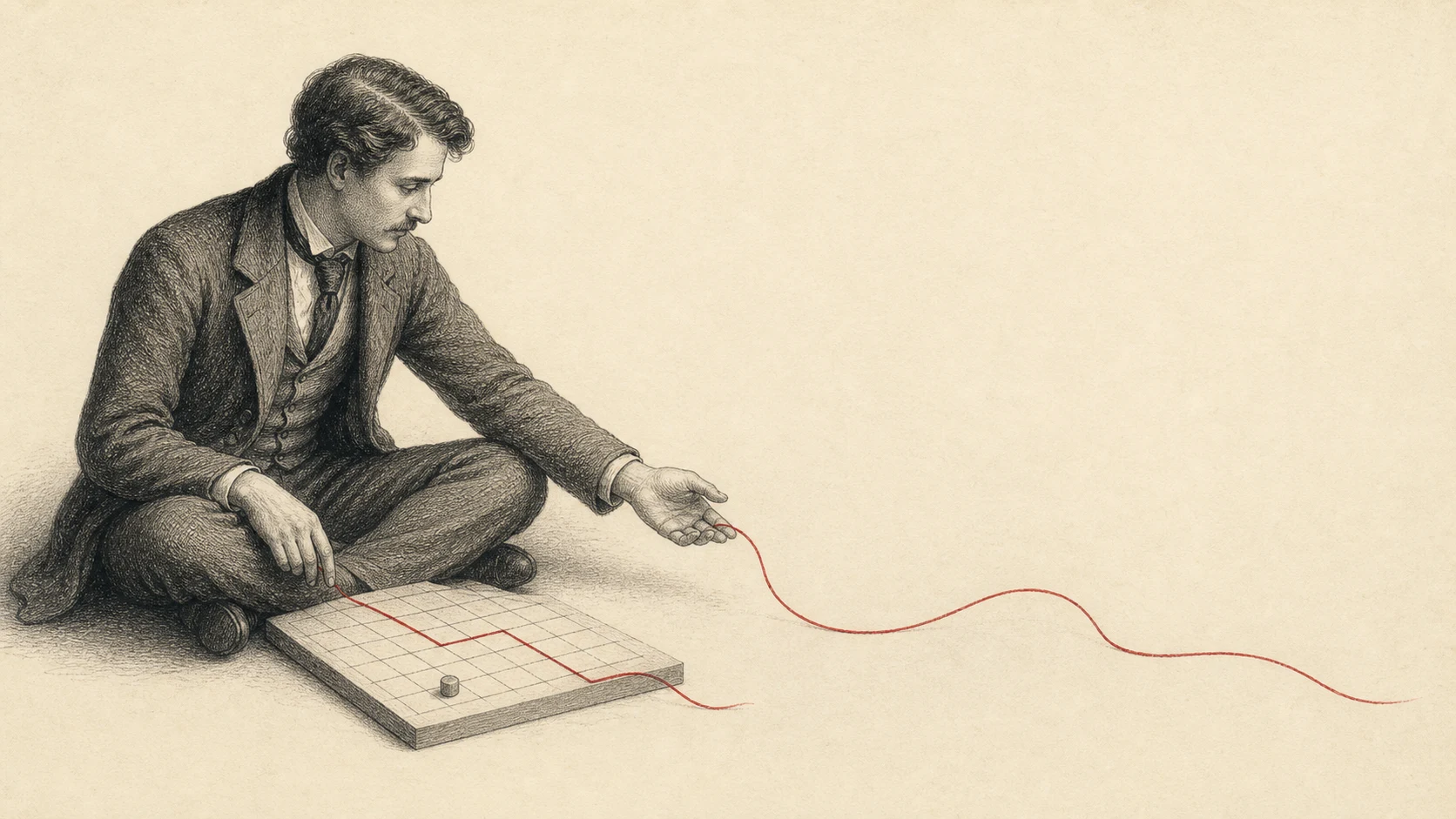
The language of games is useful when it reveals mutual expectations, hidden options, and responsive actions. It becomes dangerous when it quietly turns every relationship into a calculation, every person into a player, and love, care, coercion, grief, and mortality into matches that could supposedly be played correctly.
There is no last arena
Calling death the last arena seems to restore order: there is a trial, a stake, a worthy response, and a final score. But the metaphor quietly turns dying into a competition, survival into merit, and fear and dependence into defeat. Finitude needs another language: action without the promise of victory, help without takeover, and dignity without an examination.
Continue the thought
Works that test the thesis rather than repeat it
Freedom is not merely a formal right, but a real capability to be and do what a person has reason to value.
Nicomachean EthicsAristotlePractical wisdom offers no single formula for the good; it teaches us to judge the particular case well and to form character through action.
Moral LuckBernard WilliamsWe judge people by consequences that did not depend on them alone; life does not let us separate responsibility completely from chance.
The shoulders this chapter stands on
A source is not a seal of truth. Each entry says what it clarifies and where its lens needs to be limited.
Amartya Sen
Development as Freedom and the capability approach
What it clarifies
Freedom is not only a formal right or a resource, but the real opportunity to be and do what a person has reason to value.
What it does not prove
The approach deliberately provides no single list of goods; evaluating capabilities in practice remains contested and contextual.
Epictetus
Enchiridion
What it clarifies
Distinguishing the response available to us from the full control unavailable to us frees our strength for real action.
What it does not prove
Inner discipline does not erase poverty, violence, illness, or the institutions that objectively narrow a person's choices.
Primo Levi
The Drowned and the Saved
What it clarifies
Survivors do not represent all who died, and the outcome of an extreme situation cannot honestly be explained by character, meaning, or virtue alone.
What it does not prove
Levi's concepts belong to the specific history of the Holocaust; they must not be turned into universal motivational metaphors.
Bernard Williams and Thomas Nagel
Essays on Moral Luck
What it clarifies
Our moral judgments depend on consequences and circumstances that a person controls only in part.
What it does not prove
Recognizing luck does not abolish responsibility; it makes our assessment of responsibility more accurate and modest.
Simone de Beauvoir
The Ethics of Ambiguity
What it clarifies
My freedom is realized in a world of other freedoms; I cannot honestly claim authorship for myself while turning everyone else into scenery.
What it does not prove
Existential language about freedom needs to be supplemented by an analysis of the body, class, trauma, and institutions.
Immanuel Kant
Groundwork of the Metaphysics of Morals
What it clarifies
Another person must not be merely a means to our project: their capacity to choose places a limit on effective action.
What it does not prove
An abstract rule does not always resolve conflicting duties or show how to act within unequal relations of power.
Viktor E. Frankl
Man's Search for Meaning
What it clarifies
Even when possibilities radically contract, a person may seek concrete meaning in a relationship, duty, love, or way of responding to the situation.
What it does not prove
Meaning does not guarantee survival and must not be turned into an accusation against those who break, fall ill, or die.