Freedom is the set of actions actually available, not the number of options on paper
A person may formally be allowed to leave, study, or refuse, yet a right does not become a possibility without health, time, money, knowledge, support, and protection from a devastating penalty. Freedom is measured more accurately by what a person is actually able to do in their situation.
Agency is the capacity to make a meaningful response from one's available position. It depends both on an inner decision and on the external conditions that expand or contract the range of feasible action.
When freedom is reduced to personal resolve, structural constraint becomes a moral defect in the person. When only structure is visible, the person is deprived of the part of their response that remains. Both errors impoverish action.
First, distinguish
Two concepts that are easy to mistake for one another
A formal choice is an option not forbidden by law, contract, or rule. A real opportunity is an option a person can exercise with their available resources and without a devastating cost. An employee may formally resign. If their visa is tied to the employer, their family depends on the insurance, and they have no savings, exit exists legally but is almost closed in practice.
Influence is the ability to change the probability of another person's action or a future outcome. Control is the rarer ability to keep a significant result within defined bounds despite disturbances. A parent can raise a child with care and strongly influence their development, but cannot control the child's illness, friendships, or future decisions. Recognizing the limit of control does not mean abandoning influence.
The same option gives different freedom to people with different capabilities
Freedom should be assessed not only by permitted options and resources, but by a particular person's ability to convert them into a life they value.
Why this happens
The same resource produces different results depending on the body, safety, skill, care, social norms, and available infrastructure. An equal formal menu can therefore conceal profound inequality in feasible action.
Every student receives the same online course. One has a laptop, quiet, and a mentor; another studies on a phone while caring for a younger child. Access is equal. The opportunity to learn is not.
Do not confuse this with
Do not confuse real opportunity with a guaranteed result. A free person may make a mistake or refuse. The role of conditions is to make action possible, not to prescribe one correct life.
Where the idea stops working
Freedom cannot be measured on one universal scale: people reasonably value different forms of life. Assessment requires both common rights and the person's own voice.
Question for the situationWhich declared option can the person actually realize, what prevents a resource from becoming action, and does the person value that option?
Dependence on support can expand agency rather than diminish it
Human independence is ordinarily sustained by bodies, language, relationships, and institutions. Accepting help can restore the ability to choose rather than surrender it.
Why this happens
Action depends on supports no individual creates alone: treatment, knowledge, trust, roads, law, and the division of labor. Good support expands the range of responses and preserves the recipient's voice; bad support makes access conditional on obedience.
After an injury, a person uses an assistant and accessible transport. They depend on help, yet precisely that dependence lets them work, meet people, and choose their own schedule.
Do not confuse this with
Do not confuse enabling dependence with subordination. The test is whether the support expands the person's own decisions and whether its terms can be negotiated.
Where the idea stops working
Help can become control when there is only one provider, refusal is punished, and the person's needs are defined without them.
Question for the situationDoes this relationship expand my set of feasible actions, or turn every action into payment for someone else's approval?
Responsibility should follow the capacity to respond
The greater a person's authority, knowledge, time, and safe alternatives, the greater their responsibility for foreseeable effects. Limited control reduces responsibility, but does not always erase it.
Why this happens
Responsibility connects harm to the point where a person could have noticed a risk, chosen differently, or stopped the chain. Demanding an answer where no action was possible creates guilt without a path to repair; ignoring an available action makes influence irresponsible.
An engineer must report a dangerous defect. A board that receives the report, can stop production, and understands the scale of the consequences bears greater responsibility. A customer without that information bears less.
Do not confuse this with
Do not confuse recognition of limited control with “nothing depends on me.” The question is not complete command over the outcome, but the specific action that was available.
Where the idea stops working
A formal title does not always mean real power, and personal vulnerability may make refusal dangerous. Assessing responsibility requires examining the actual cost of the alternative.
Question for the situationWhat, exactly, could I have known, prevented, or passed onward—and what part of the result truly lay beyond my possible response?
Synthesis without reconciliation at any price
Inner response and external opportunity complete one another
Epictetus returns our attention to the response that remains available when the world will not obey us. Sen shows that the range of available responses is itself created by bodies, resources, rights, and institutions. Beauvoir adds a moral boundary: to will one's own freedom while systematically destroying the freedom of others is contradictory. Mature freedom is therefore neither omnipotence nor solitary independence. It is the supported capacity to act and answer among other people.
A tension worth preservingThe language of inner freedom preserves action in harsh conditions, but becomes cruel when used to explain poverty or violence. The language of constraints protects against blaming the victim, but becomes disempowering when it stops searching for the remaining space of response.
Long view
An essay that carries this idea through a complete argument
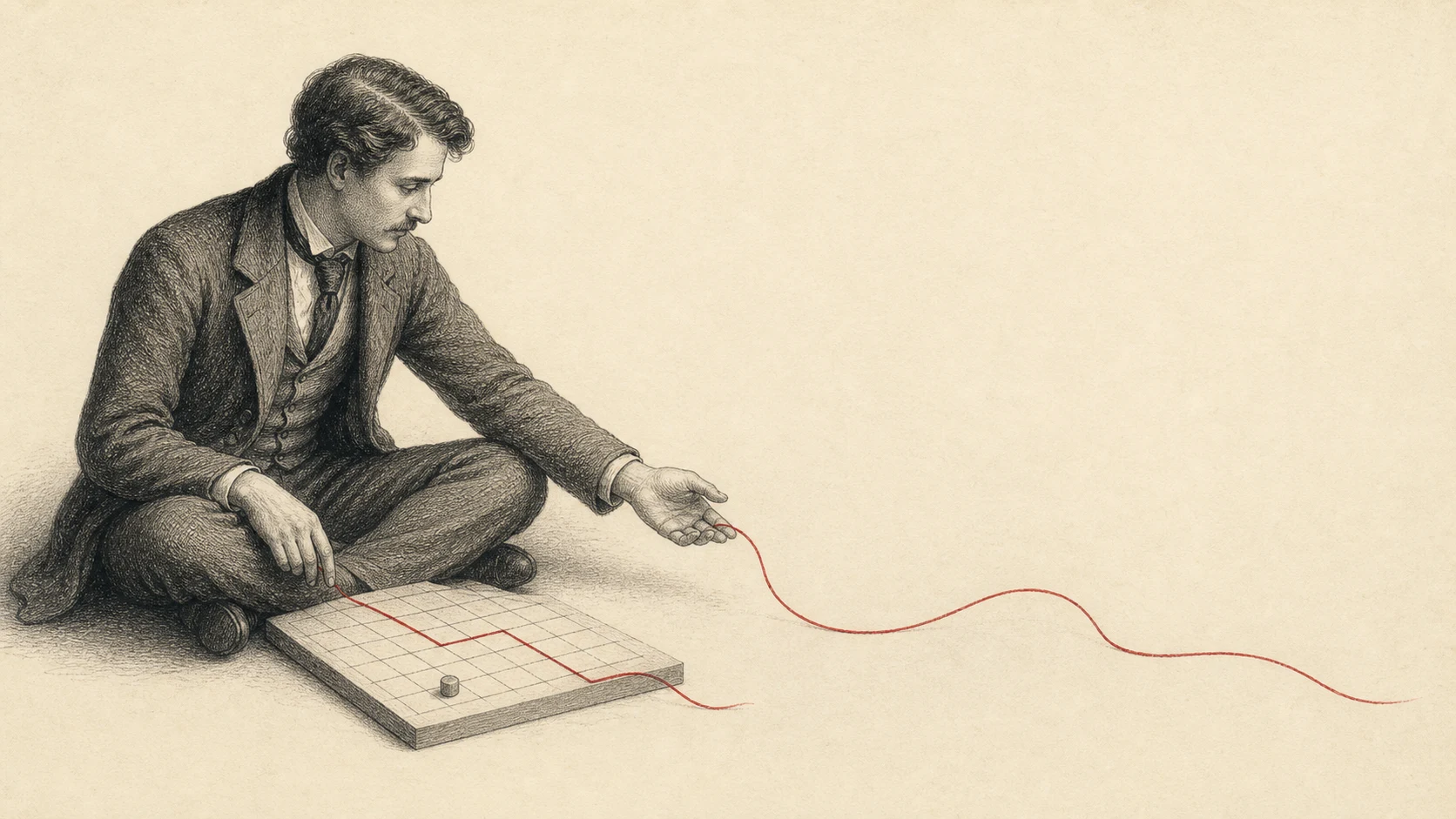
The language of games is useful when it reveals mutual expectations, hidden options, and responsive actions. It becomes dangerous when it quietly turns every relationship into a calculation, every person into a player, and love, care, coercion, grief, and mortality into matches that could supposedly be played correctly.
Strategy Is the Art of Organized Refusal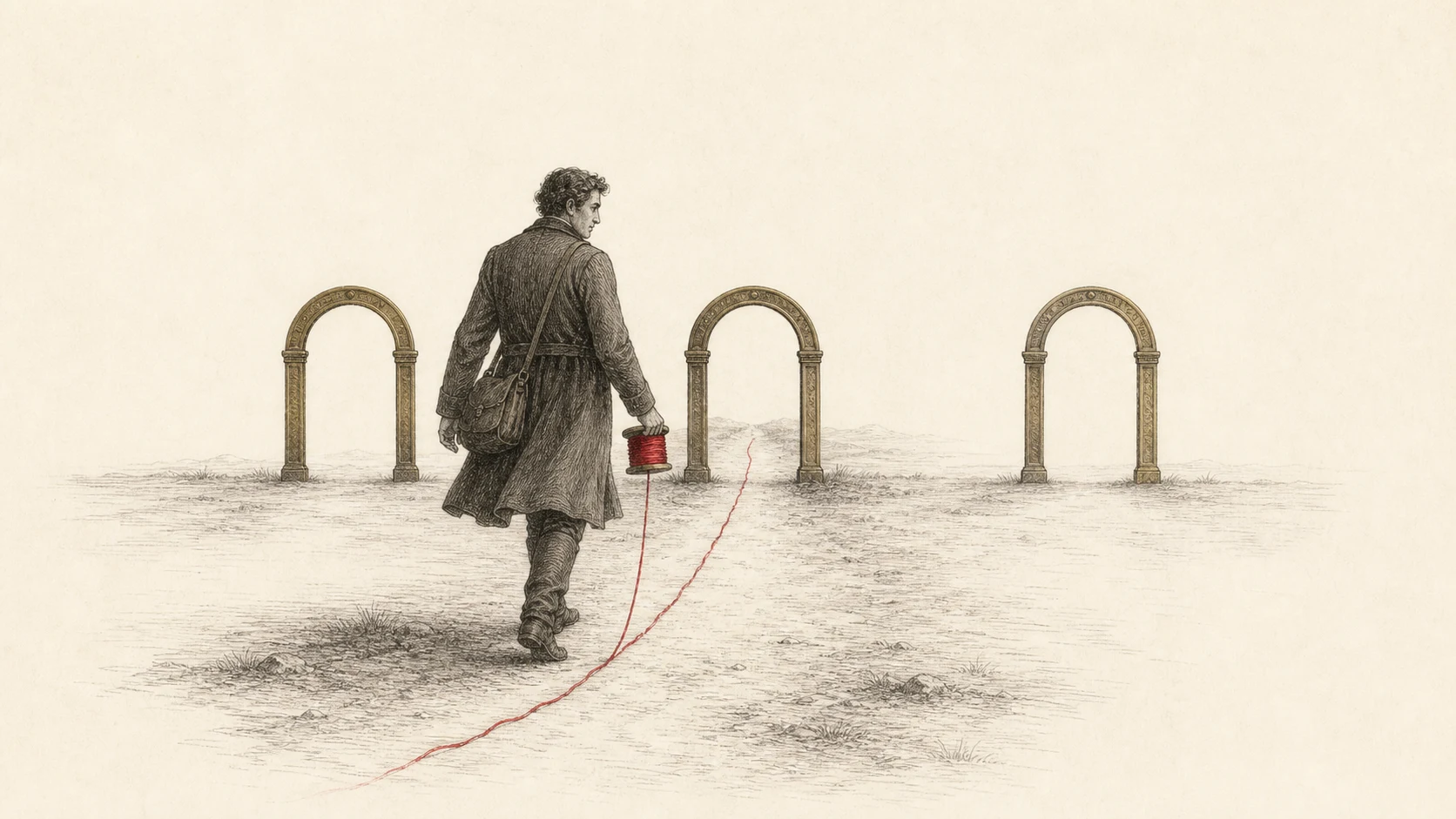
Strategy begins where not every good thing can be done at once. It turns a diagnosis of the central difficulty into a coherent set of actions and makes the price of choice visible: which possibilities will be postponed, which obligations will remain, and which boundary must not be crossed even for the desired result.
There is no last arena
Calling death the last arena seems to restore order: there is a trial, a stake, a worthy response, and a final score. But the metaphor quietly turns dying into a competition, survival into merit, and fear and dependence into defeat. Finitude needs another language: action without the promise of victory, help without takeover, and dignity without an examination.
Continue the thought
Works that test the thesis rather than repeat it
The shoulders this chapter stands on
A source is not a seal of truth. Each entry says what it clarifies and where its lens needs to be limited.
Amartya Sen
Development as Freedom and the capability approach
What it clarifies
Freedom is not only a formal right or a resource, but the real opportunity to be and do what a person has reason to value.
What it does not prove
The approach deliberately provides no single list of goods; evaluating capabilities in practice remains contested and contextual.
Simone de Beauvoir
The Ethics of Ambiguity
What it clarifies
My freedom is realized in a world of other freedoms; I cannot honestly claim authorship for myself while turning everyone else into scenery.
What it does not prove
Existential language about freedom needs to be supplemented by an analysis of the body, class, trauma, and institutions.
Herbert A. Simon
Administrative Behavior
What it clarifies
People choose with limited time, attention, and knowledge, so they seek an option that is good enough rather than calculate a global maximum.
What it does not prove
Boundedness does not release us from improving decisions; it requires us to design the environment, search rules, and feedback.
Hannah Arendt
The Human Condition
What it clarifies
Human action arises among people who are equal and distinct; no one fully controls the story begun by their own deed.
What it does not prove
The distinctions among labor, work, and action illuminate experience, but do not form a strict empirical classification of every life.
Epictetus
Enchiridion
What it clarifies
Distinguishing the response available to us from the full control unavailable to us frees our strength for real action.
What it does not prove
Inner discipline does not erase poverty, violence, illness, or the institutions that objectively narrow a person's choices.
Max Weber
Politics as a Vocation
What it clarifies
A responsible actor considers not only the purity of conviction, but also the foreseeable consequences of using force.
What it does not prove
Appeals to consequences easily become excuses for an absence of principle when no limits are stated in advance.
Bernard Williams and Thomas Nagel
Essays on Moral Luck
What it clarifies
Our moral judgments depend on consequences and circumstances that a person controls only in part.
What it does not prove
Recognizing luck does not abolish responsibility; it makes our assessment of responsibility more accurate and modest.