Part I
Seeing
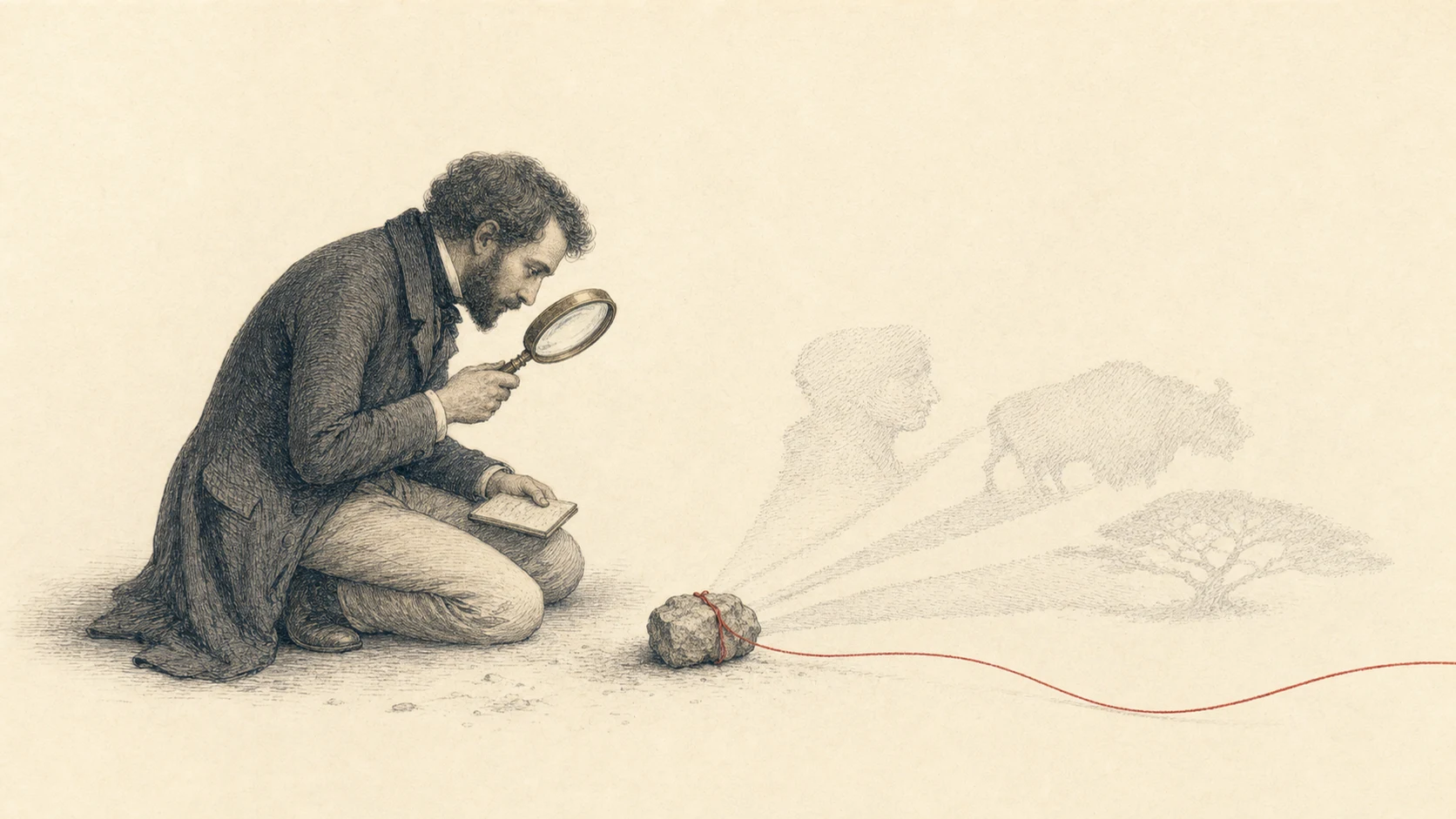
Separate the trace from the story, the decision from the outcome, the event from the structure, and an open dispute from power over the agenda itself.
Guiding questionWhat was actually observed here—and what was filled in by the mind, a metric, or an institution?
A focused route through the map
Chapters in this part
Reality leaves traces; explanation connects them into a story
We never receive an event whole. We see documents, numbers, memories, bodily symptoms, and consequences, then explain how they fit together. Intellectual honesty therefore begins with a simple order: first name the observable trace, then the inference drawn from it, then the evaluation, and only after that—the decision.
3 key ideasRead the chapterA decision is made with the available evidence; the outcome arrives later
Before a choice, several futures are possible; after it, only one outcome has occurred. Knowing the result easily creates the illusion that it was obvious all along. To truly learn, we must assess separately the quality of the reasoning before the outcome and the information brought by the outcome.
3 key ideasRead the chapterA recurring result is produced by a structure, not by the last event alone
When a problem recurs with different people, an explanation based on the character of one culprit grows weak. We need to examine flows of information and resources, what is rewarded, where delays occur, and who benefits from pushing costs beyond the boundary of their own domain.
3 key ideasRead the chapterPower determines not only decisions, but what can be seen, said, and changed
A command is the most visible form of power, but not the deepest. Before any command, someone has already decided who is present, which evidence counts as serious, what question enters the agenda, and how much it will cost a person to object or leave.
3 key ideasRead the chapterLong-form arguments
Essays that cross this territory
How can we remain faithful to reality when we encounter it only through imperfect observations, instruments, words, and institutions of knowledge?
Read the essay 02Who Has the Right to Define Reality?Why a dispute about power begins before a command or a vote—with the authority to name the problem, build the category, and decide whose bad news will be heard.
Read the essay 05Victory changes the winnerSuccess does more than give a person greater possibilities. It changes the people around them, the information that reaches them, and the explanation they construct about themselves. The central danger of victory therefore begins not when the result is lost, but when the result is taken as final proof that the winner was right.
Read the essay