Why the outcome does not end the story: what victory and defeat change next
Victory ends an episode but immediately creates new expectations, dependencies, and responses. Defeat removes some possibilities, but does not always determine the next trajectory. The meaning of an outcome lies not only in the score, but in the world that score sets in motion.
An outcome should be assessed in four dimensions: what happened now, how resources and options changed, what reactions others will begin, and what kind of person the participant is becoming. Victory does not prove infallibility, defeat does not prove unfitness, and the order that follows matters more than a handsome end to the round.
A winner who mistakes luck for character loses access to truth and may turn an advantage into a fragile dependency. A loser who defends dignity through revenge or denial loses the lesson and future alliances. Yet the call to “look ahead” must not dismiss real harm, fair restitution, or the right to grieve a loss.
First, distinguish
Two concepts that are easy to mistake for one another
An outcome tells us who received what in the episode that ended. A trajectory includes the new resources, expectations, habits, responses, and risks set in motion by that outcome. The same win can begin durable cooperation or a long campaign of revenge.
The first requires only the desired result now. The second requires rules after victory that do not depend on permanent exceptional control, concealment of truth, or humiliation of the defeated.
Victory changes the system of incentives; it does not suspend causality
After success, the central difficulty must be defined again, because other people’s expectations, the cost of error, access to information, and the winner’s own habits have changed.
Why this happens
Resources and status attract new allies and opponents, raise the stakes of decisions, and make unwelcome truth more costly for those around the winner. Methods that helped during the ascent keep receiving internal approval even after the environment requires different behavior.
A startup becomes the market leader. Its former problem—finding customers—gives way to service reliability, bureaucracy, control over data, and leadership overconfidence. Continuing to behave like a small rebel is now dangerous for millions of users.
Do not confuse this with
Do not confuse an achieved advantage with proof of the universal ability of the person who reached the top.
Where the idea stops working
Analysis of the next risk does not cancel joy, gratitude, or the value of completion. Not every achievement must immediately become an anxious audit.
Question for the situationWhat has this victory made possible, obligatory, and dangerous—and which former strength can now become a weakness?
A victory that requires the defeated to remain humiliated preserves the cause of revenge
A settlement is more likely to endure when the outcome can be enforced but the defeated retain safety, an intelligible place in the new order, and a lawful way to defend their remaining interests.
Why this happens
A person or group with neither voice nor a dignified exit has a permanent incentive to sabotage the order, seek an outside ally, or await the winner’s weakness. A procedure for objection and limits on power move part of the conflict from a struggle for destruction into a dispute within rules.
After a hard-fought competition, a manager can publicly mock the losing team and exclude it from decisions. Or the manager can record the result, explain the criteria, preserve an appeal, and use the strong parts of the losing proposal. The second course gives people fewer reasons to turn the next year into a hidden war.
Do not confuse this with
Do not confuse recognizing the defeated party’s interests with reversing the result or extending equal trust to every side.
Where the idea stops working
Some participants retain an intent to cause harm and use concessions to prepare the next attack. A legitimate procedure needs safeguards, verification of commitments, and proportionate sanctions.
Question for the situationWhat action does the new order make rational for the defeated: cooperation, honest voice, exit, or concealed revenge?
Defeat can yield truth without becoming a definition of the person
A useful review of defeat separates decision quality from luck, preserves an accurate record of the facts, and turns the remaining resources into the next possibility for action.
Why this happens
A blow to identity pushes a person either to deny the error or to declare their whole self an error. Separating process, outcome, and chance allows a specific model to be corrected, useful abilities to be preserved, and revenge to be rejected as the only way to recover dignity.
A team closes a failed product. Instead of saying “the market was stupid” or “we are talentless,” it compares forecasts with results, identifies the untested assumption, refunds customers, and preserves technology that may serve another project.
Do not confuse this with
Do not confuse accepting the outcome with agreeing that it was fair, and do not confuse explaining chance with refusing responsibility for harm.
Where the idea stops working
Some defeats destroy health, home, trust, or any real possibility of another attempt. They should not be romanticized as “a valuable lesson”; safety, restitution, and time to grieve come first.
Question for the situationWhat here speaks to the quality of the decision, what is explained by chance, what harm must be acknowledged, and what capacity can still be preserved?
Synthesis without reconciliation at any price
An outcome is a fact about an episode, not a complete verdict on its participants
Victory and defeat are real: they distribute resources, safety, and the right to decide. But they do not carry a ready-made explanation of merit, human worth, or the future. Practical wisdom after an outcome means acknowledging the fact, seeing the reactions it has set in motion, limiting new harm, and preserving the ability to correct the trajectory.
A tension worth preservingIf every outcome is too quickly called “a new beginning,” the cost of defeat and the winner’s responsibility disappear. If the outcome is declared the final truth about people, chance, learning, and the possibility of a different order disappear.
Long view
An essay that carries this idea through a complete argument
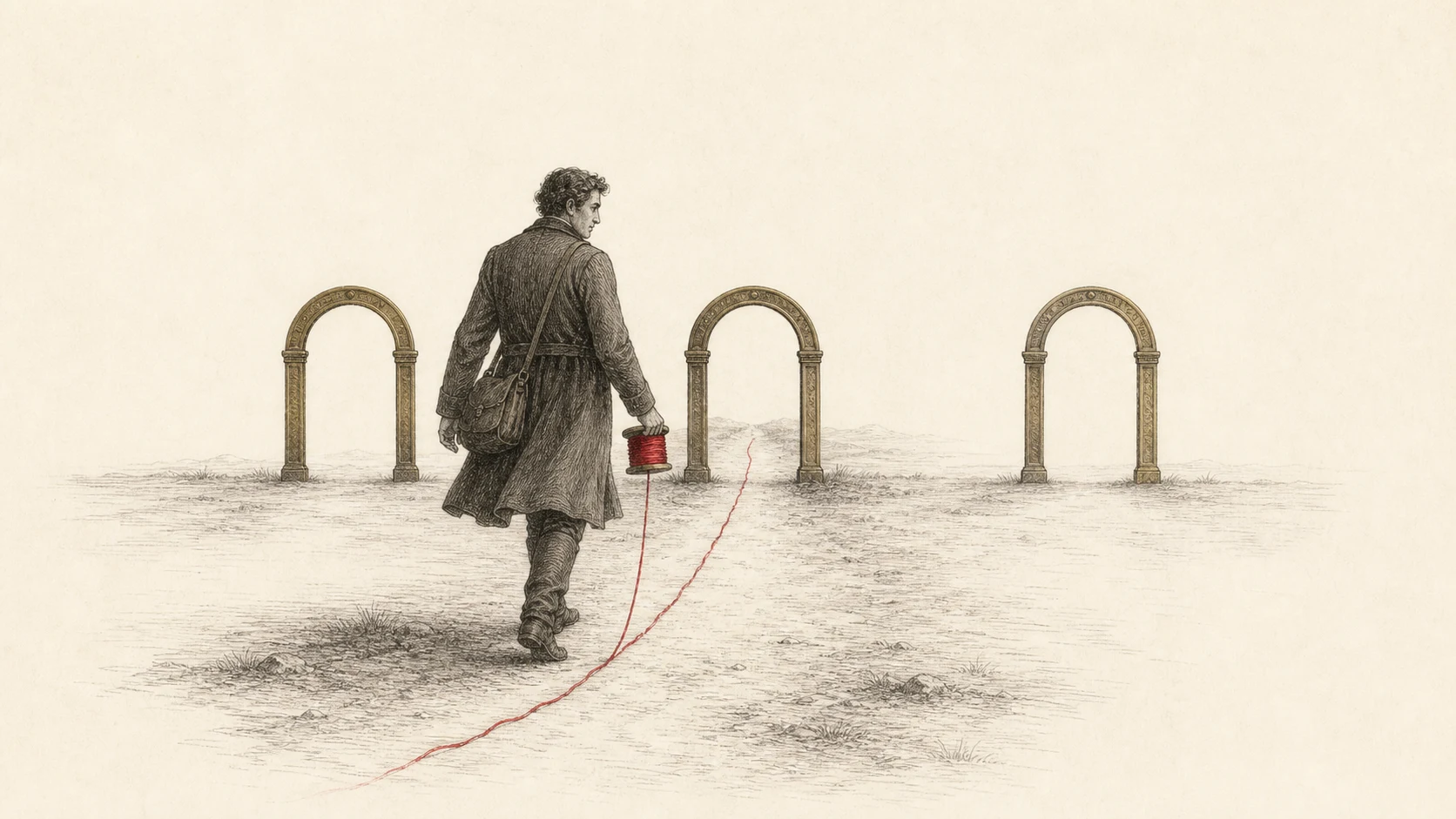
Strategy begins where not every good thing can be done at once. It turns a diagnosis of the central difficulty into a coherent set of actions and makes the price of choice visible: which possibilities will be postponed, which obligations will remain, and which boundary must not be crossed even for the desired result.
Victory changes the winner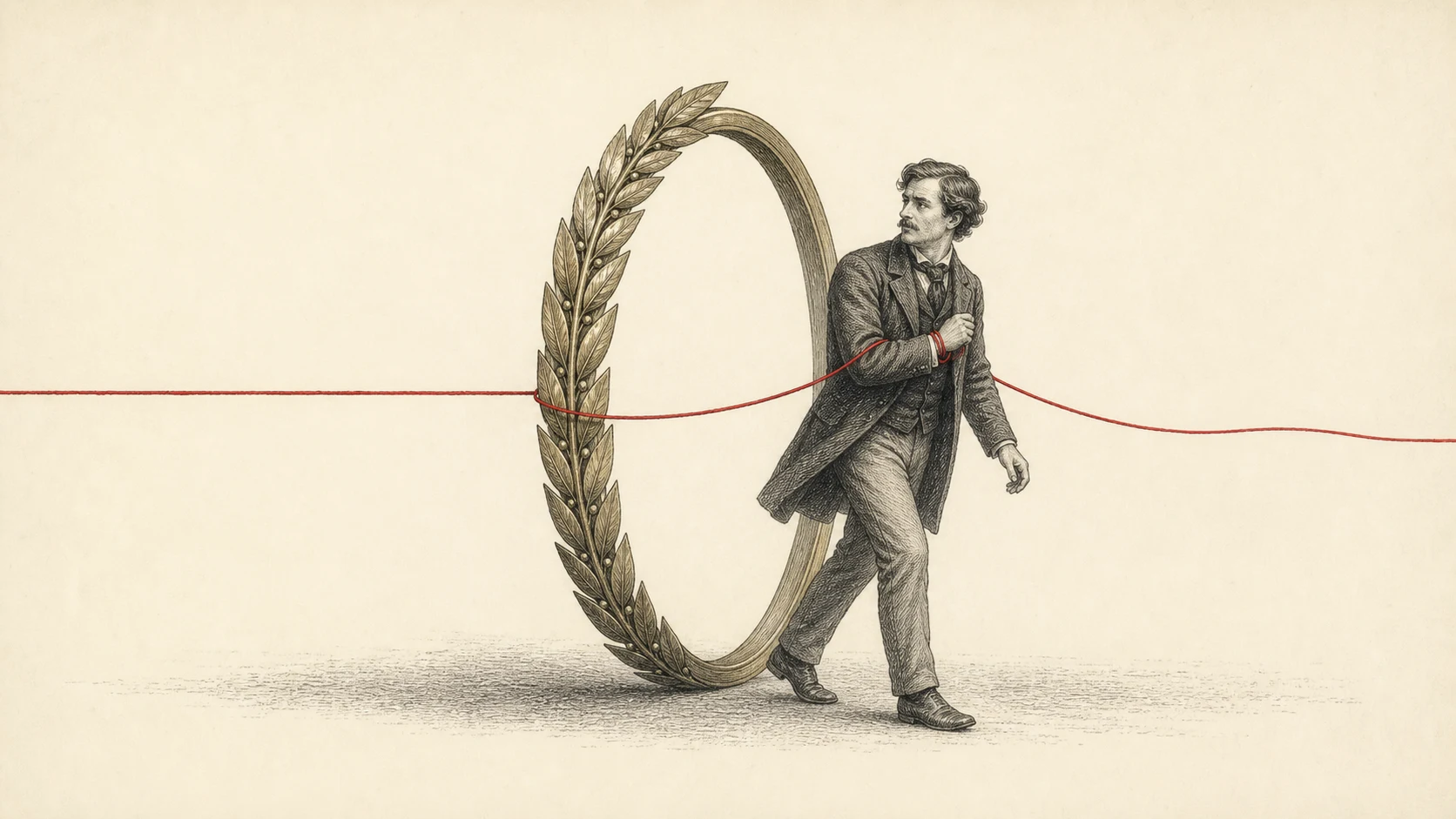
Success does more than give a person greater possibilities. It changes the people around them, the information that reaches them, and the explanation they construct about themselves. The central danger of victory therefore begins not when the result is lost, but when the result is taken as final proof that the winner was right.
Continue the thought
Works that test the thesis rather than repeat it
Strategy is an honest diagnosis, a guiding policy, and coherent action—not a list of aspirations.
The Human ConditionHannah ArendtAction begins among different people; its story always exceeds the intention of any single author.
Moral LuckBernard WilliamsWe judge people by consequences that did not depend on them alone; life does not let us separate responsibility completely from chance.
The shoulders this chapter stands on
A source is not a seal of truth. Each entry says what it clarifies and where its lens needs to be limited.
Carl von Clausewitz
On War
What it clarifies
A plan encounters friction, uncertainty, and an adversary's will; action cannot be derived from a map without leaving room for adaptation.
What it does not prove
Military logic dangerously distorts relationships, learning, and politics when every problem is declared a war.
Nassim Nicholas Taleb
Fooled by Randomness
What it clarifies
A visible winner does not prove the quality of the process: we must look for the role of luck, invisible losers, and risks capable of eliminating the next attempt.
What it does not prove
Taleb's own polemical style and vivid stories also require examination, not submission to a new authority.
Hannah Arendt
The Human Condition
What it clarifies
Human action arises among people who are equal and distinct; no one fully controls the story begun by their own deed.
What it does not prove
The distinctions among labor, work, and action illuminate experience, but do not form a strict empirical classification of every life.
Herbert A. Simon
Administrative Behavior
What it clarifies
People choose with limited time, attention, and knowledge, so they seek an option that is good enough rather than calculate a global maximum.
What it does not prove
Boundedness does not release us from improving decisions; it requires us to design the environment, search rules, and feedback.
Thomas C. Schelling
The Strategy of Conflict
What it clarifies
A promise, threat, or commitment works only when the other side believes the future move; sometimes restricting one's own options changes the game.
What it does not prove
A threat's strategic effectiveness does not make it morally permissible or account for the full human cost of conflict.
Albert O. Hirschman
Exit, Voice, and Loyalty
What it clarifies
When a system deteriorates, a person can leave, try to change it through voice, or remain out of loyalty; the availability of each response changes the others.
What it does not prove
Real people may be trapped without safe exit or voice; loyalty can be either constructive or exploited.
Hannah Arendt
On Violence
What it clarifies
Power is not a leader's possession: it exists for as long as people remain capable of acting in concert.
What it does not prove
Real regimes often mix consent, dependence, coercion, and violence; a clean distinction does not describe the entire mixture.
Niccolò Machiavelli
The Prince
What it clarifies
Political action must be judged by the arrangement of forces, loyalties, and consequences, not only by stated intentions.
What it does not prove
Describing a cruel world is not a moral license for cruelty.
Bernard Williams and Thomas Nagel
Essays on Moral Luck
What it clarifies
Our moral judgments depend on consequences and circumstances that a person controls only in part.
What it does not prove
Recognizing luck does not abolish responsibility; it makes our assessment of responsibility more accurate and modest.
Karl Popper
Conjectures and Refutations
What it clarifies
Knowledge grows not from infallibility, but from an arrangement that allows a strong hypothesis to encounter the possibility of error.
What it does not prove
Scientific practice is more complex than a single act of refutation; evidence depends on measurement, auxiliary assumptions, and a community.
Chris Argyris
Double Loop Learning in Organizations
What it clarifies
Sometimes what must be corrected is not an action within a rule, but the rule, goal, or assumption that governed the action.
What it does not prove
A call to revise the frame can become endless reflection and avoidance of necessary practice.