Part III
Acting with Others
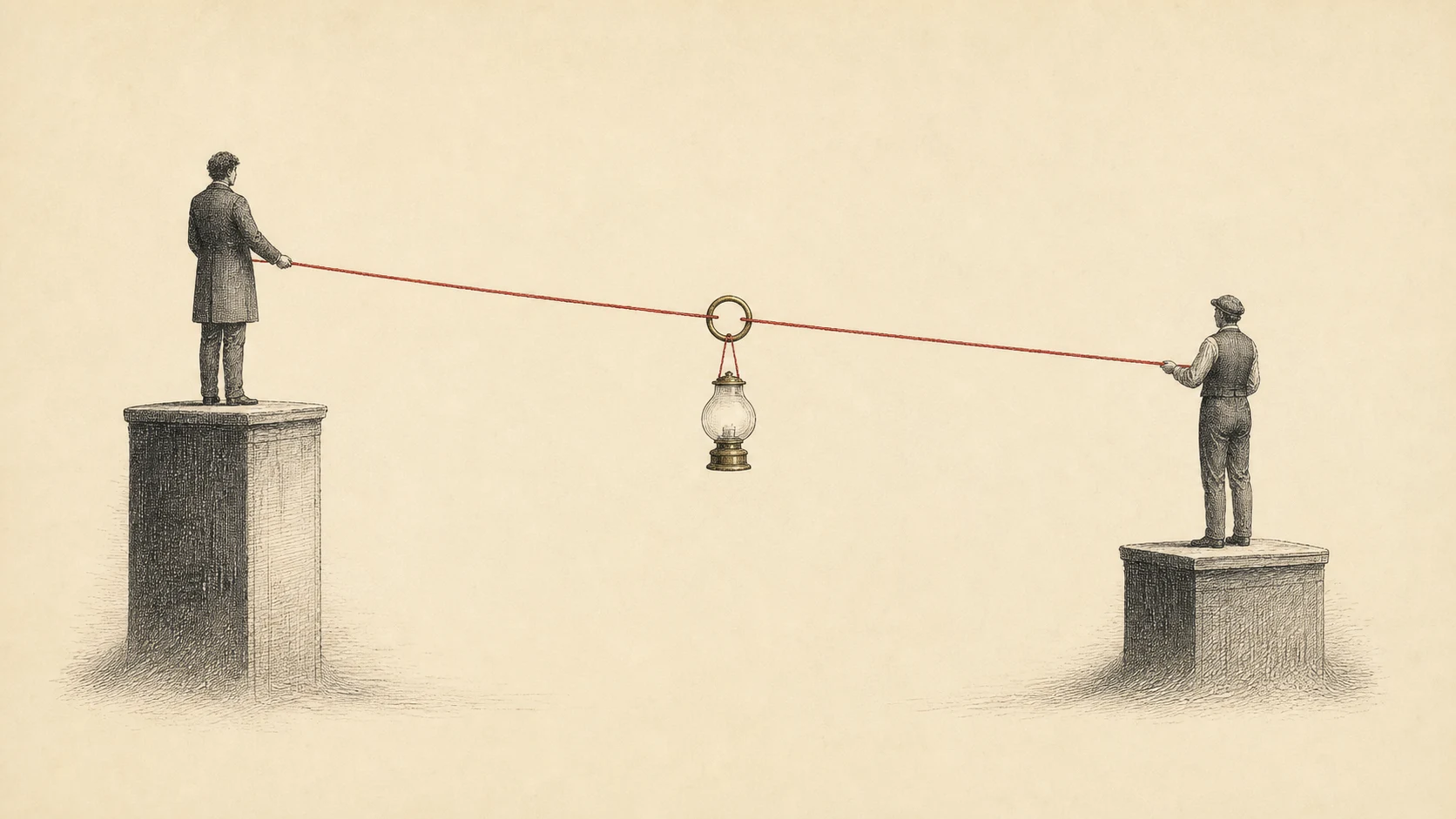
Distinguish games, conflict, cooperation, arenas, institutions, and status competition instead of compressing them into a single word about influence.
Guiding questionWhose actions determine the outcome, who sets the rules, and who is free to refuse?
A focused route through the map
Chapters in this part
Games: how people’s actions change one another’s calculations
A situation becomes strategic not simply because other people are present. It becomes strategic when my outcome depends on their choices, while their choices depend on what they expect me to do. Before choosing a move, we must understand the structure of this mutual dependence.
3 key ideasRead the chapterCooperation and conflict: how to build relationships that can survive a breach
Working together rests on more than good intentions. People make mistakes, interests diverge, participants change, and promises are sometimes broken. Durable cooperation establishes in advance how conduct will be verified, harm repaired, objections heard, and a common undertaking resumed.
3 key ideasRead the chapterArenas and institutions: who gets a voice, information, protection, and an exit
People do not act on an empty field. Before they make a choice, roles, documents, time, language, decision rights, access to data, and the cost of refusal have already been distributed. This environment does not wholly determine conduct, but it makes some actions easy, others costly, and still others almost invisible.
3 key ideasRead the chapterHow shared narratives and status distribute trust, roles, and the right to be heard
Chapter 01 showed how a person connects traces into an explanation. Here the question is different: which explanation becomes shared, who receives the role of expert, culprit, or witness within it, and why some people’s words carry more weight before they even speak. A narrative is a recurring shared story that organizes a group’s attention, responsibility, and next move.
3 key ideasRead the chapterLong-form arguments
Essays that cross this territory
Why a dispute about power begins before a command or a vote—with the authority to name the problem, build the category, and decide whose bad news will be heard.
Read the essay 03The World Is Made of More Than GamesThe language of games is useful when it reveals mutual expectations, hidden options, and responsive actions. It becomes dangerous when it quietly turns every relationship into a calculation, every person into a player, and love, care, coercion, grief, and mortality into matches that could supposedly be played correctly.
Read the essay 04Strategy Is the Art of Organized RefusalStrategy begins where not every good thing can be done at once. It turns a diagnosis of the central difficulty into a coherent set of actions and makes the price of choice visible: which possibilities will be postponed, which obligations will remain, and which boundary must not be crossed even for the desired result.
Read the essay 05Victory changes the winnerSuccess does more than give a person greater possibilities. It changes the people around them, the information that reaches them, and the explanation they construct about themselves. The central danger of victory therefore begins not when the result is lost, but when the result is taken as final proof that the winner was right.
Read the essay 06There is no last arenaCalling death the last arena seems to restore order: there is a trial, a stake, a worthy response, and a final score. But the metaphor quietly turns dying into a competition, survival into merit, and fear and dependence into defeat. Finitude needs another language: action without the promise of victory, help without takeover, and dignity without an examination.
Read the essay